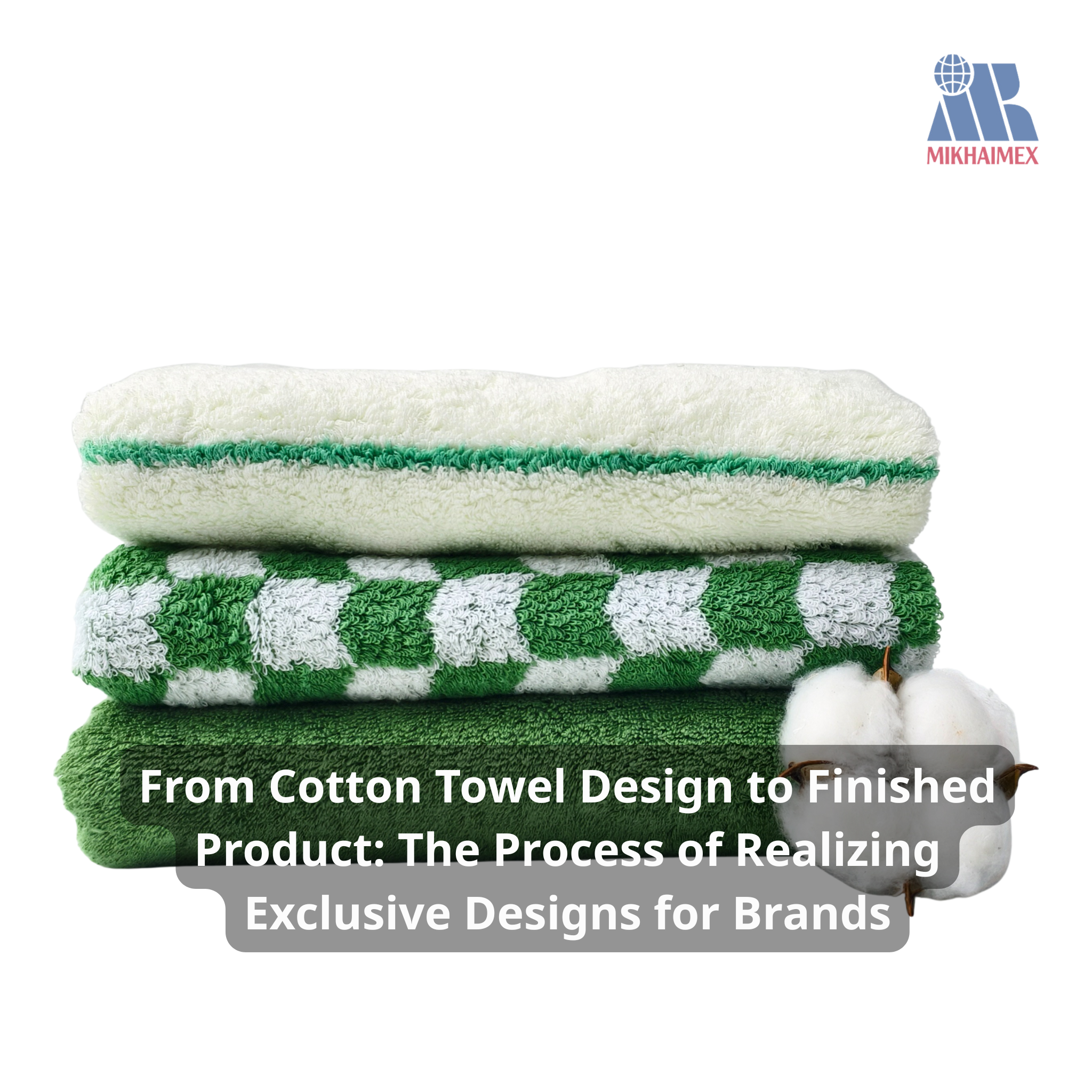
From Cotton Towel Design to Finished Product: The Process of Realizing Exclusive Designs for Brands
In today’s highly competitive market where customer experience directly shapes brand equity, even the smallest details act as silent brand ambassadors. For five-star hotel chains, boutique resorts, and premium textile brands, a cotton towel is far from a mere utility for drying off. It represents a critical tactile touchpoint where luxurious softness, substantial weight, and brand identity seamlessly converge into one premium experience. However, the intricate journey of transforming an initial concept from a technical sketch into a flawless, exclusive finished product—one that meets strict international standards for both aesthetics and long-term durability—is a sophisticated art that demands absolute engineering precision at every consecutive stage.
1. Defining Technical Specifications and Digitizing the Cotton Towel Design
Every exclusive institutional towel begins with a comprehensive consultation to solve a specific operational puzzle for the partner. The manufacturer works hand-in-hand with the brand’s purchasing managers to deeply analyze the end-user profile, corporate identity, and the exact laundry environment to establish precise technical specifications. At this foundational stage, cotton towel design goes far beyond mere visual aesthetics; it defines the structural “DNA” of the product. This involves calculating the ideal GSM (grams per square meter) rating to determine thickness, configuring exact commercial dimensions, and selecting the optimal yarn structures, such as durable 16/1 double-loop cotton for rigorous industrial setups or ultra-soft 30/2 single-loop cotton for premium retail lines. Once these physical parameters are agreed upon, design engineers digitize the artwork using specialized textile CAD software, meticulously calculating every single warp and weft stitch to prepare the computerized machinery for high-density logo embroidery or intricate Jacquard weaving.
2. Selecting Raw Materials and Weaving Sample Prototypes for the Cotton Towel Design
After a meticulous raw material selection process, 100% natural cotton fibers undergo strict laboratory testing for staple length, uniformity, and tensile strength to ensure they can withstand commercial wear. For the premium hospitality and export segments, these raw materials must strictly comply with the global OEKO-TEX textile safety certification system, guaranteeing that the yarn is completely free from harmful substances or skin-irritating chemicals. Before committing the factory to large-scale mass production, creating physical sample prototypes on modern high-speed looms is a mandatory step in the quality assurance pipeline. These initial prototypes are sent directly to the client for hands-on evaluation of fabric hand-feel, plushness, logo sharpness, and water absorption capacity, ensuring absolute engineering perfection and official sign-off before the main production line is officially activated.
3. Closed-Loop Production Operations and Product Finishing Processes
Once the pre-production prototype receives formal approval from the brand, mass production commences under automated electronic monitoring to strictly control yarn tension, loop height, and instantly prevent weaving defects. After leaving the heavy-duty looms in large rolls, the fabric sheets undergo precise longitudinal slitting, heavy-duty side-hemming, and reinforced end-hemming to prevent fraying during usage. For white institutional towels specialized for luxury hotels, the scouring and bleaching processes are strictly regulated within a closed-loop system to achieve a pristine, brilliant white standard. This industrial process intentionally avoids the utilization of harmful optical brighteners or chemical dyes, thereby fully preserving the natural gentleness, structural integrity, and original absorbency of the cotton fibers through hundreds of harsh industrial launderings.
4. Rigorous Quality Control and Finished Goods Packaging
Before being loaded into shipping containers for domestic delivery or international export, every single towel must pass through a strict final quality control (QC) barrier. The specialized inspection team manually examines each piece under high-intensity lighting to trim loose threads, re-verify physical dimensions, check weight consistency against the committed GSM, and pass the goods through automated metal detectors to guarantee absolute safety for end-users. Only the products that achieve flawless scores proceed to the climate-controlled packaging room. Here, the towels are vacuum-compressed and sealed into specialized, moisture-proof protective bags, which successfully preserves their natural fluffiness, volume, and pristine appearance until they are finally unwrapped at the brand’s luxury establishment.
5. Minh Khai Textile – The Companion Elevating Branded Cotton Towel Design
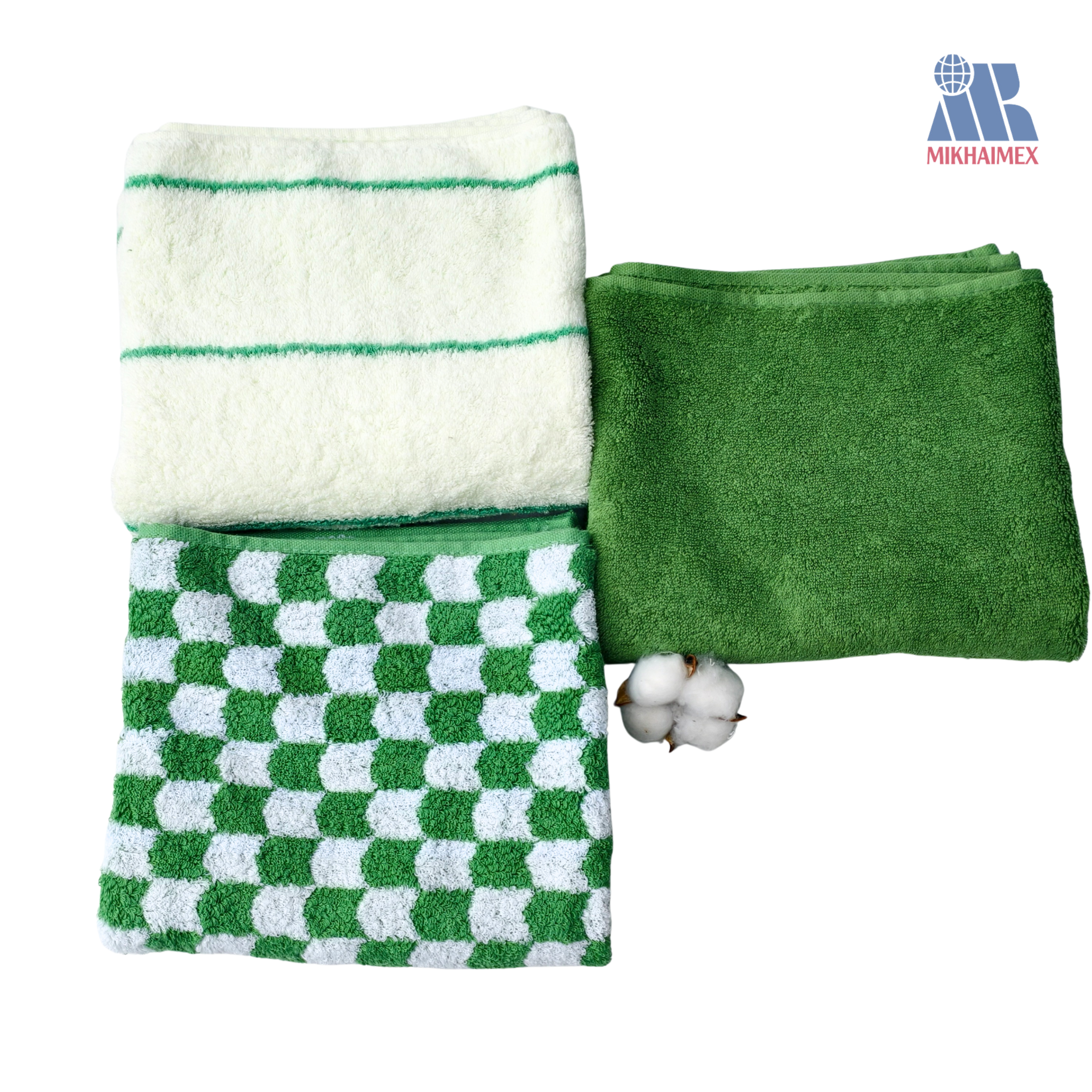
To fully realize this rigorous corporate process from initial sketch to the final finished product, selecting a manufacturing partner with robust core capabilities and international compliance is the ultimate deciding factor. With decades of manufacturing expertise and a modern technological foundation, Minh Khai Textile proudly serves as a premier strategic partner specializing in supplying high-end towel products for both the demanding domestic market and competitive export regions. The seamless combination of refined design thinking and large-scale manufacturing capacity at Minh Khai Textile not only empowers global brands to own sharp, durable, and OEKO-TEX-compliant exclusive towels, but also effectively optimizes operational costs, affirming business prestige and professional stature at every single customer touchpoint.