Strict Mechanical Durability Standards When Exporting Terry Towel Orders to the Japanese Market
1. Stringent Technical Barriers of the Japanese Market and the Position of Mechanical Durability Standards
In the global agricultural and textile trade map, Japan has long been renowned as one of the most demanding markets with extremely rigorous technical barrier systems. Customers and retail corporations in the land of the rising sun demand not only aesthetic sophistication and biological safety but also pay special attention to actual product durability metrics. When receiving international textile orders, Japanese partners always establish specific technical criteria sets to ensure products avoid structural displacement, rotting, or shape distortion after hundreds of industrial wash-dry cycles. Fully satisfying mechanical tests regarding tensile strength, tear strength, and abrasion resistance for terry towel items serves as the crucial key helping Vietnamese manufacturing enterprises affirm prestige and expand market share in this potential destination.
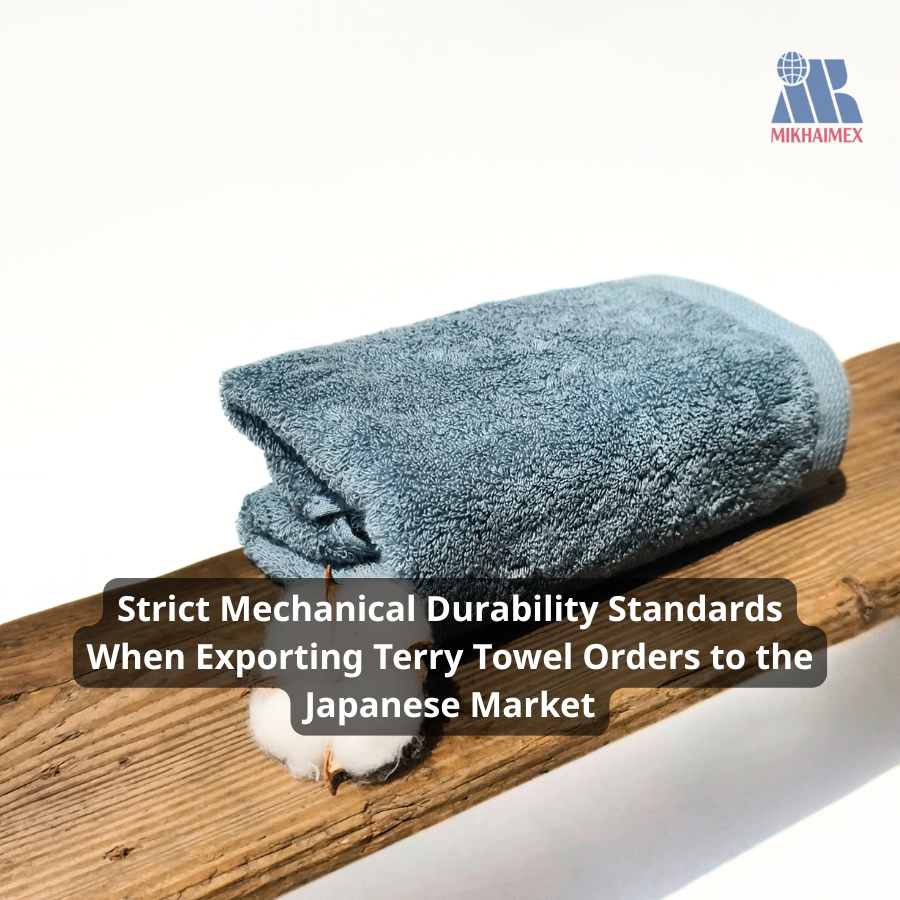
2. Tensile and Tear Strength Testing Standards According to the JIS Inspection System
For an order lot to gain customs clearance and distribution across Japanese supermarket chains, sample products must pass strict mechanical strength tests under the JIS industrial standards system. Tensile breaking strength tests measure maximum force tolerance of fabric layers along both warp and weft directions prior to fiber breakage. Additionally, tear strength indexes are rigorously inspected to guarantee woven surface loops do not snap when encountering strong friction during daily usage. Selecting combed long-staple cotton sources possessing superior lengths alongside high-density weaving techniques assists terry towel structures in achieving optimal molecular bonding, thereby surpassing demanding strength threshold tests set by Japanese importers.
3. Controlling Fiber Slippage, Lint Shedding, and Loop Structural Deformation After Laundering
One of the common technical defects outright rejected by Japanese quality inspectors is fiber shedding or surface linting following usage. Japanese consumers habituate daily use of large-capacity washer-dryers, meaning uncalibrated yarn twists or loose weave densities cause raised surface loops to quickly dislodge, fray, and generate lint dust affecting aesthetics. Manufacturing plants are mandated to adopt specialized double-needle edge stitching technologies along with biological enzyme surface treatments to tightly anchor woven fiber bases. Consequently, finished terry towel items preserve smooth surfaces, resisting loop pulling or shape deformation after high-intensity simulated wash-dry test protocols.
4. Requirements for Friction Colorfastness and Dimensional Shrinkage Resistance Across Multiple Usage Cycles
Mechanical durability for textiles exported to Japan resides not only in fiber strength tolerance but also directly connects with preserving original product states. Dry and wet friction colorfastness tests are strictly executed to guarantee dye molecules do not bleed onto adjacent items when heavily rubbed. Concurrently, post-wash dimensional shrinkage indexes represent mandatory technical thresholds controlled strictly below maximum allowable ratios. If a terry towel suffers geometric distortion, excessive shrinkage, or edge warping after contacting hot water and drying temperatures, the entire shipment faces risks of rejection. Thus, heat-setting and anti-shrinkage finishing processes play extremely critical roles within export linen production lines.
5. Minh Khai Textile Company – Closed Production Capacity Fully Meeting Japanese Export Standards
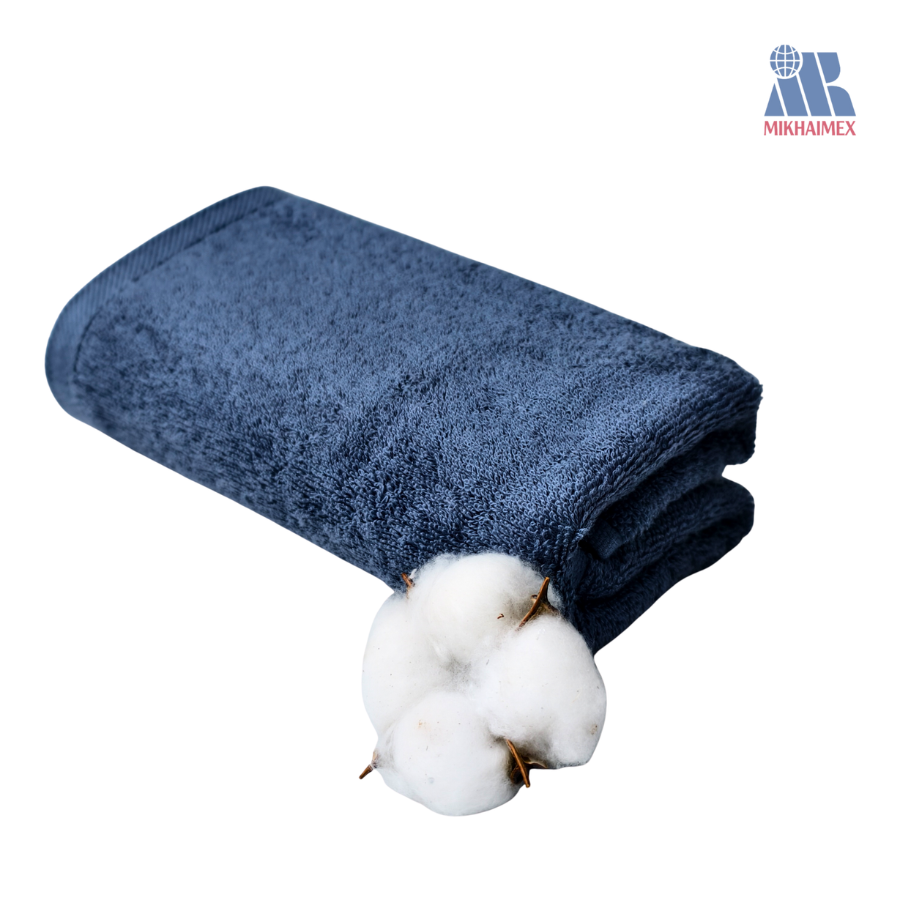
Proudly serving as a trusted manufacturing partner for multiple international brands, Minh Khai Textile Company has successfully built a comprehensive quality management system, flawlessly fulfilling demanding Japanese market criteria. Operating modern European weaving and dyeing technology lines alongside 100% natural combed cotton sources, Minh Khai strictly monitors every mechanical parameter from tensile force and tear strength to friction colorfastness. Each terry towel shipment manufactured by Minh Khai proudly achieves OEKO-TEX biosafety certification and passes the most rigorous technical inspection tests. With flexible OEM/ODM manufacturing capacity and standardized packaging workflows, Minh Khai Textile Company commits to accompanying B2B partners in supplying high-quality terry towel lines, affirming the position of Vietnamese textile brands in the global arena.