The Dark Side of Instant Softness: Why Super-Soft New Terry Towels Rot and Tear the Fastest?
1. Initial Tactile Traps and Consumer Selection Psychology
In purchasing habits for consumer goods or bathroom equipment, initial tactile perception always plays a decisive role driving final buying decisions for most customers. A towel offering silky, velvet-like softness right in hand immediately generates impressions of a premium, high-quality item. However, within professional textile manufacturing, artificial softness present directly off store shelves frequently serves as a warning sign regarding poor mechanical durability. Many manufacturers, desiring to falsify quality concepts, overuse surface chemical treatments to generate fake plushness. Unpacking technical realities behind this phenomenon helps B2B buyers and consumers recognize the true value of a standardized terry towel.
2. Overusing Silicon Softeners and the Trap of Weakening Fiber Bonding
To create rapid soft drape for products made from short cotton fibers or recycled yarns, finishing dyeing processes are often intensified with large amounts of silicon-based softeners. Physically and chemically, these silicon molecules coat each woven strand, constructing an artificial lubricating film that reduces friction between fibers. This tactilely deceptive smooth sensation actually severely degrades natural bonding forces among cellulose molecules within cotton strands. When this lubricating layer coats fibers too thickly, cotton strands cannot interlock to maintain tensile resilience under stress. Consequently, the terry towel easily suffers fiber breakage after just a few centrifugal spin cycles in industrial washing machines.
3. Destruction of Woven Yarn Structures via Harsh Chemical Fluffing Technologies
Another technical cause making products extremely soft initially yet rapidly rotting and tearing is the abuse of bleaching and bio-treatment routines using high-concentration chemicals. To fluff yarn quickly without spending time on natural fiber conditioning, certain processing mills utilize strong acids or alkalis to lightly decay outer cotton fiber walls. This process generates immediate fluffiness but severely destroys the resilient inner cores of yarn strands. Once load-bearing cores suffer chemical erosion, the terry towel quickly experiences heavy lint shedding, thinning surfaces, rotting tears, and shape distortions within short operational timeframes.
4. Suffocating Water Absorbency and Accumulating Dirt Residues Driving Fabric Rot
Beyond reducing mechanical tensile strength, the chemical softener coating surrounding yarn strands acts as the primary culprit eliminating cotton’s natural water uptake capacities. Silicon molecules possess strong hydrophobic properties, clogging micro-capillary tubes and preventing water molecules from penetrating yarn cores. Upon usage, the terry towel repels water across skin, generating uncomfortable wet, sticky sensations. More dangerously, this hydrophobic chemical layer traps soap residues and dead skin cells inside fabric strands during daily use. Under high drying temperatures, accumulated residues crystallize into sharp micro-particles, silently severing woven fiber bases from within and causing the terry towel to rot rapidly.
5. Selection Solutions for Standard Combed Cotton Terry Towels from Minh Khai Textile
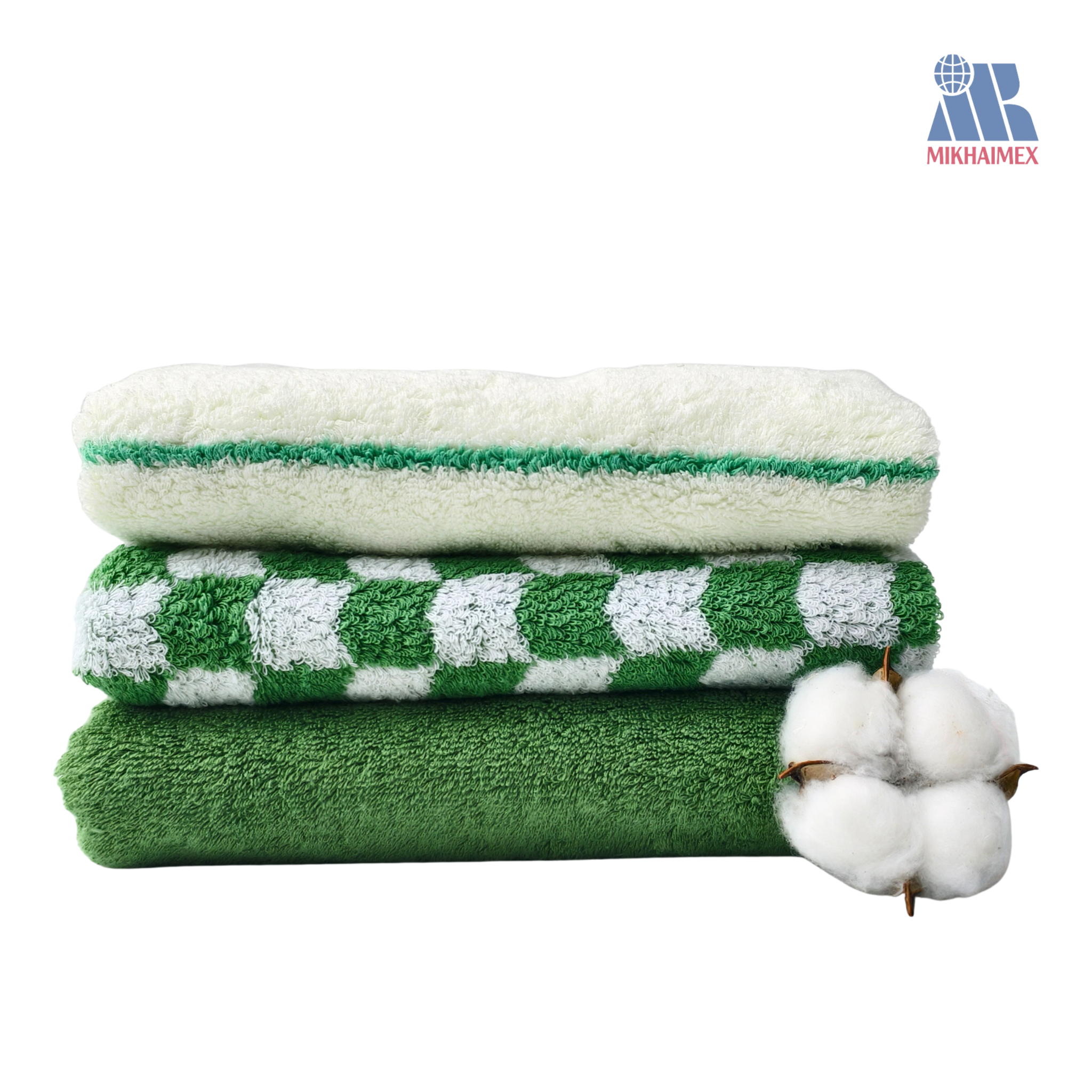
To achieve sustainable softness alongside superior water absorption, products must be woven from natural long-staple combed cotton sources without relying on artificial chemical softeners. Minh Khai Textile Company proudly stands as a reputable manufacturer applying standardized European dyeing and weaving workflows upon selected 100% cotton bases. Terry towel lines under the Minh Khai brand may display natural fiber firmness fresh off production, but after initial wash cycles expand into plush softness, absorbing water instantly while maintaining resilient durability across hundreds of wash-dry cycles. Achieving prestigious OEKO-TEX biosafety certifications and possessing robust OEM/ODM capacity, Minh Khai commits to supplying standardized terry towel lines, helping B2B partners and hotels optimize costs and protect long-term brand reputations.