Influence of Edge Hemming Stitching on Mechanical Strength of Bath Towels in Heavy-Duty Industrial Laundries
1. Rigorous Operational Pressures in Industrial Laundering Environments on Hotel Linens
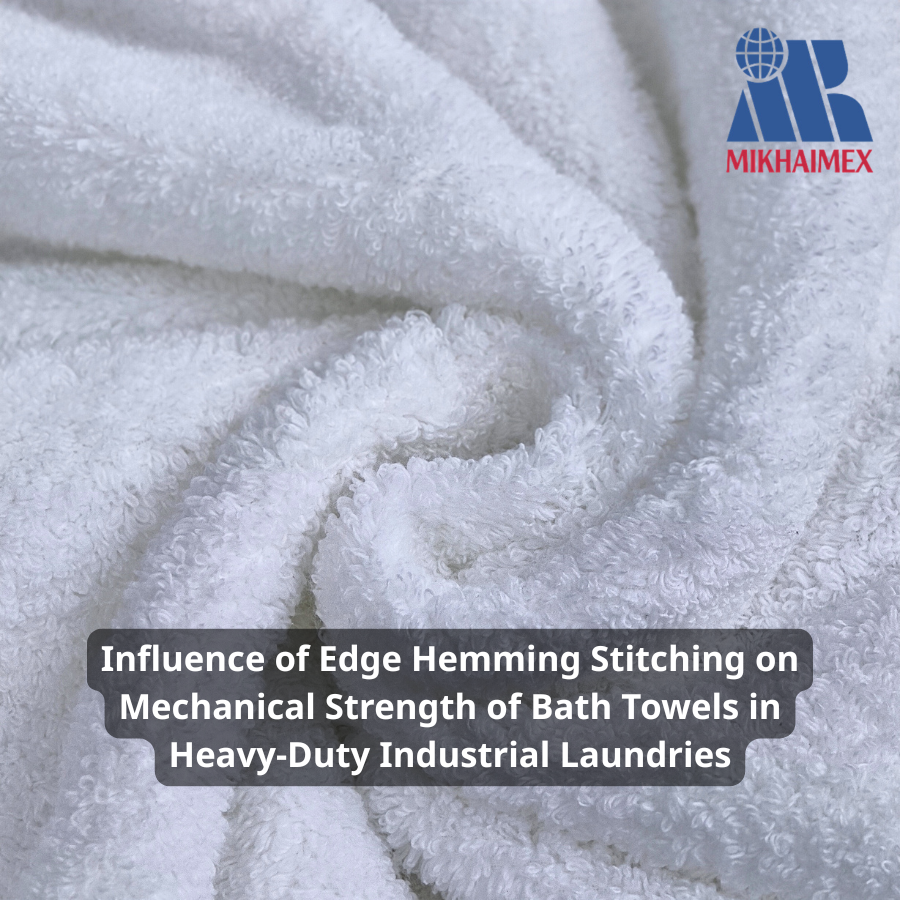
In hospitality and resort industries, bath towel service lifespans always represent crucial metrics determining operational cost optimization efficiency. Daily, towels undergo continuous cleaning cycles within heavy-duty industrial laundries operating at massive capacities. Here, products endure not only harsh chemical detergents but also face violent mechanical impact forces inside washing drums, high-speed centrifugal extraction forces, and fiery drying temperatures. Across a towel’s entire architecture, edge hemming stitching endures the highest concentration of mechanical stress. If edge hems warp or burst open, the entire bath towel rapidly frays, loses geometric shapes, and faces early rejection. Therefore, studying the influence of hemming techniques on mechanical strength plays a core role in extending product lifespans.
2. Analyzing Edge Hemming Forms and Mechanical Strength Mechanisms Under Centrifugal Extraction
From a textile technical perspective, edge hemming locks woven base threads, preventing surface loops from unraveling during routine usage. Currently, manufacturers apply single-stitched or double-stitched hemming methods to complete towel borders. Operating inside industrial washing drums, centrifugal extraction forces pull fabric layers tightly toward edge borders. For products utilizing thin single-stitched hems, sparse stitch densities concentrate pull forces onto few fixed points, easily causing thread snapping or edge fraying. Conversely, specialized double-stitched hemming techniques featuring parallel twin lines evenly distribute pull forces along entire towel borders. This structure constructs a robust mechanical barrier, helping the bath towel preserve precise geometric shapes without edge tearing through severe centrifugal extraction cycles.
3. Adverse Effects of Hem Bursting on Loop Woven Cotton Fiber Structures
Once edge hemming stitching deforms or snaps, loop woven structures across fabric surfaces face immediate severe threats. Under continuous friction impacts within high-capacity washers, broken edge threads pull out adjacent woven loops. This phenomenon quickly transforms a luxury bath towel into a misaligned, linting item lacking professional aesthetics. Furthermore, unraveling fiber threads snag inside washing drums or wrap onto adjacent items, causing line disruptions and elevating annual hotel asset depreciation ratios. Controlling hemming quality strictly right from production serves as the root solution protecting internal combed cotton fibers, preserving loft, and maintaining long-term utility for every bath towel in high-frequency operational environments.
4. Optimization Solutions for Stitch Densities and Corner-Locking Techniques Enhancing Mechanical Strength
To elevate mechanical resistance for towel edges against industrial laundry pressures, manufacturers must synchronously combine stitch densities with advanced corner-locking technologies. Utilizing high-strength polyester-core threads wrapped in natural cotton delivers stitching that remains resiliently flexible while resisting high drying temperatures without becoming brittle. Stitch densities must be calculated precisely—neither too sparse to weaken bond strengths nor too dense to sever base fibers. Crucially, the four border corners of the bath towel must be reinforced using specialized corner-locking techniques, creating sturdy anchor points resisting multidirectional tearing forces. A bath towel possessing robust double-stitched hems and locked corners multiplies mechanical durability, providing hotel managers complete confidence regarding linen lifespans.
5. Minh Khai Textile Company – Superior Durable Hemming Standards for Horeca
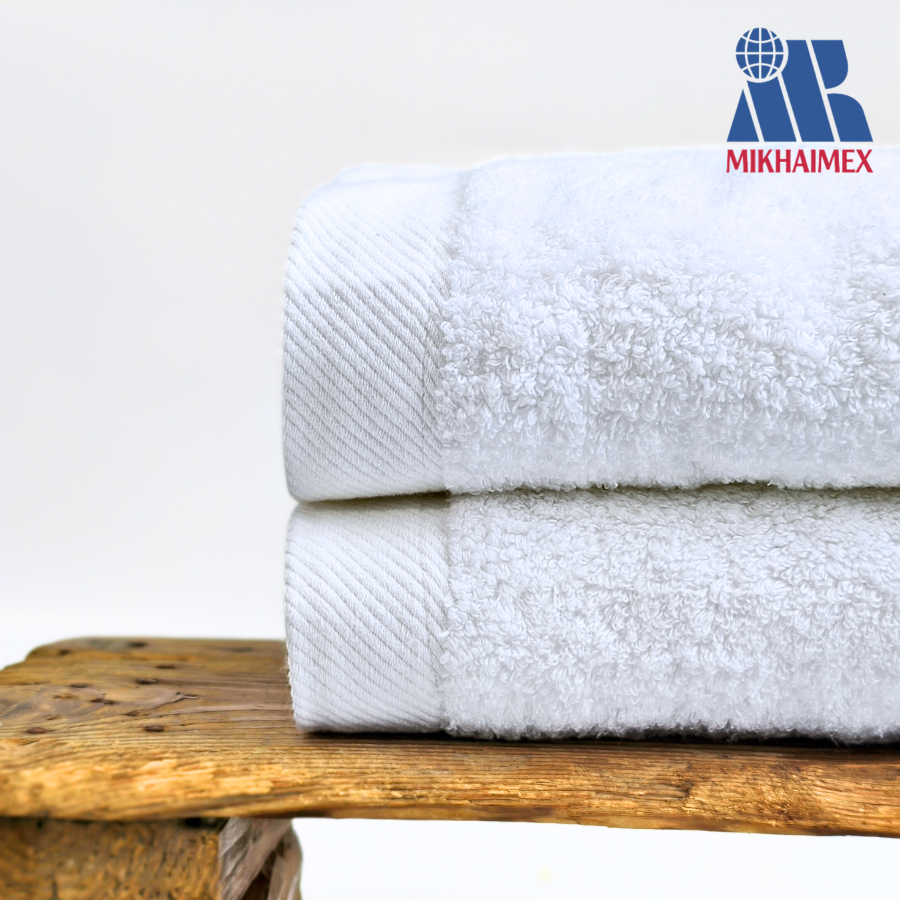
Deeply understanding practical operational pressures within industrial laundries, Minh Khai Textile Company prioritizes edge hemming processing standards across hotel linen manufacturing. The bath towel line under the Minh Khai brand is woven from 100% natural premium combed cotton, achieving prestigious OEKO-TEX biosafety certifications. Each bath towel prior to dispatch undergoes rigorous double-stitched hemming on modern automated sewing machines, combined with sturdy corner-locking techniques preventing edge bursting. Robust OEM/ODM processing capacity enables Minh Khai Textile Company to confidently supply standardized bath towel sets withstanding high-intensity friction and centrifugal extraction, helping Horeca partners extend replacement cycles and optimize operational costs sustainably.