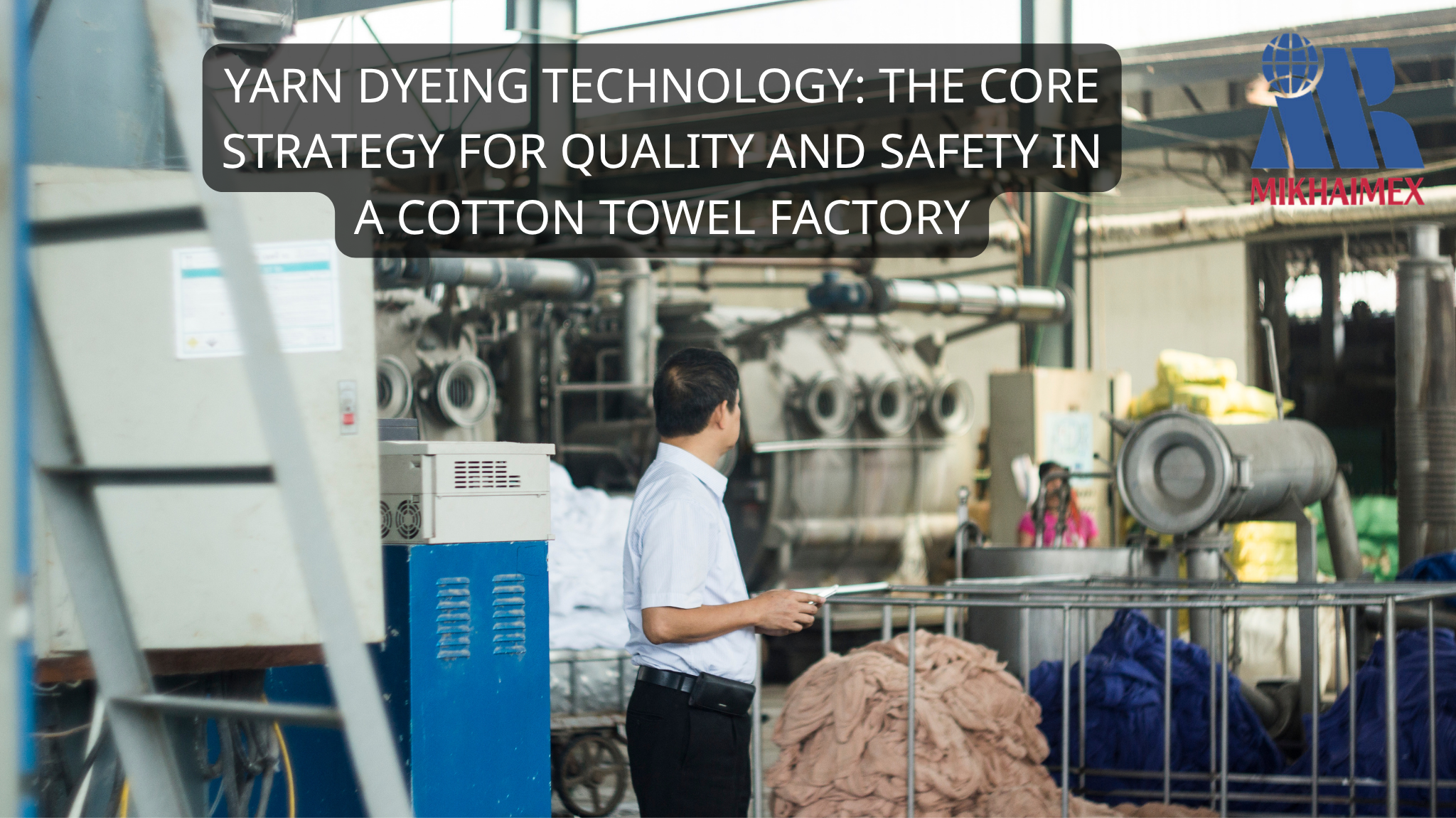
YARN DYEING TECHNOLOGY: THE CORE STRATEGY FOR QUALITY AND SAFETY IN A COTTON TOWEL FACTORY
In the value chain of the home textile industry, color is more than just an outer aesthetic layer. For an international-class cotton towel factory, dyeing technology is the “soul” that determines the sophistication, durability, and biological safety of the product. Among various coloring methods, yarn dyeing technology has emerged as the gold standard, clearly separating premium towels from mass-market products.
1. Yarn Dyeing vs. Piece Dyeing: A Revolution in Color Fastness
To understand why a large-scale cotton towel factory invests millions of dollars in yarn dyeing systems, we must distinguish it from traditional piece dyeing. Piece dyeing is the process of weaving a white towel and then dipping it into a dye bath. This method is fast and cheap, but the color only adheres to the surface, often leading to rapid fading or splotchiness after a few washes.
In contrast, yarn dyeing is the technique of coloring each yarn cone before it is put onto the loom. In a cotton towel factory, yarn cones are placed in high-pressure dyeing vats where pressure forces dye molecules deep into the core of the cotton fiber structure. As a result, color becomes an organic part of the fabric. This allows the cotton towel factory to freely create complex Jacquard designs and multi-colored patterns on the same towel surface without any risk of bleeding. This is why 5-star hotels always prioritize yarn-dyed woven logo towels to ensure sustainable luxury through hundreds of industrial laundry cycles.
2. Pre-treatment: The Art of Cleaning Fibers at a Cotton Towel Factory
A common misconception is that cotton yarn is dyed as is. In reality, raw cotton yarn contains many natural impurities such as cotton wax, fats, and seed fragments. If not thoroughly cleaned, the dye cannot adhere evenly, causing spotted colors. At the Minh Khai cotton towel factory, the pre-treatment process is carried out through extremely strict scouring and bleaching steps.
We use bio-enzyme technology to gently strip away impurities. Instead of using harsh bleaching chemicals that “burn” the fibers, using enzymes helps maintain the natural hollow structure of the cotton fiber, ensuring that after dyeing, the towel still retains its characteristic loft and absorbency. A reputable cotton towel factory always values the pre-treatment stage because it determines 90% of the brightness and consistency of the final product’s color.
3. Reactive Dyeing Technology: A Commitment to Dermatological Safety
The most pressing issue in the textile dyeing industry is toxic chemical residue. Understanding this, every modern cotton towel factory has fully transitioned to reactive dyeing technology. In the dyeing vats of a cotton towel factory, under the influence of temperature and alkali, dye molecules create stable covalent bonds with the cotton’s cellulose molecules.
This bond is so strong that the color is nearly inseparable by normal physical impacts. More importantly, reactive dyes are strictly selected to exclude carcinogenic aromatic amines or heavy metals. At the Minh Khai cotton towel factory, we strictly comply with the OEKO-TEX Standard 100. This is a promise that every towel leaving the plant is absolutely safe for mucous membranes, the sensitive skin of babies, or people with allergies.
4. Post-dyeing Quality Control and Finishing Process
The process at a professional cotton towel factory does not stop after the yarn has color. The after-washing stage is mandatory to completely remove unfixed dye residues. If this stage is poorly handled, customers will experience color bleeding during the first wash.
Next is the physical and chemical finishing process. Dyed yarn is treated with plant-based silicone softeners to restore smoothness. The cotton towel factory also conducts rigorous tests: color fastness to light (no fading under the sun), color fastness to friction (no color transfer to skin), and color fastness to chlorinated water (specifically for pool towels). This meticulousness helps the products of a cotton towel factory withstand harsh environments in industrial laundries while maintaining their original shades.
5. Sustainable Vision at Minh Khai Cotton Towel Factory
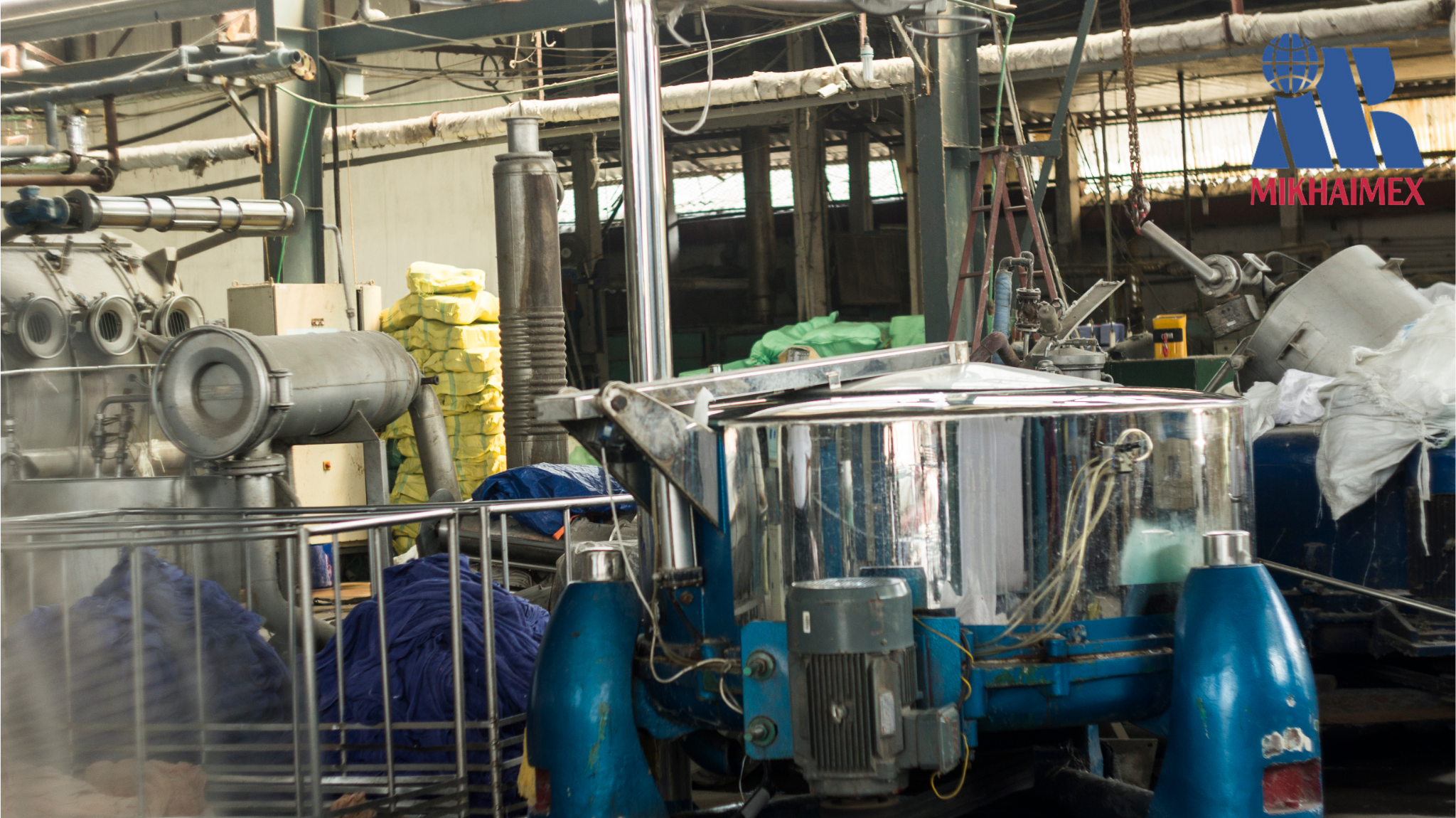
With over half a century of experience, Minh Khai goes beyond just creating beautiful colors. We understand that a responsible cotton towel factory must be tied to environmental protection. Our yarn dyeing system is designed for maximum water and energy savings through a circulation process. Modern wastewater treatment systems ensure that water after dyeing is thoroughly cleaned before being returned to nature.
At the Minh Khai cotton towel factory, every batch of dyed yarn is a crystallization of traditional textile experience and advanced chemical technology. We confidently meet the most demanding color requirements from global partners, from soft pastels to the most vibrant deep tones. Choosing the Minh Khai cotton towel factory is investing in durable, safe, and environmentally friendly products, asserting the prestige of Vietnamese brands on the world textile map.