WASTEWATER TREATMENT PROCESS IN TEXTILE DYEING: MINH KHAI TEXTILE’S COMMITMENT TO SOCIAL RESPONSIBILITY AND THE ENVIRONMENT
In the context of the global textile industry facing significant challenges regarding climate change and environmental pollution, implementing an effective wastewater treatment process in textile dyeing is no longer an optional choice but a measure of a business’s survival and reputation. For Minh Khai Textile, a specialist in cotton towel weaving with a long history of development, we do not only focus on creating soft and absorbent fibers but also place top priority on protecting water sources and the surrounding ecosystem. This article will delve into specialized wastewater treatment techniques, helping partners and customers better understand the responsibility that Minh Khai is fulfilling.
1.Characteristics and pressure of textile dyeing wastewater on the environment
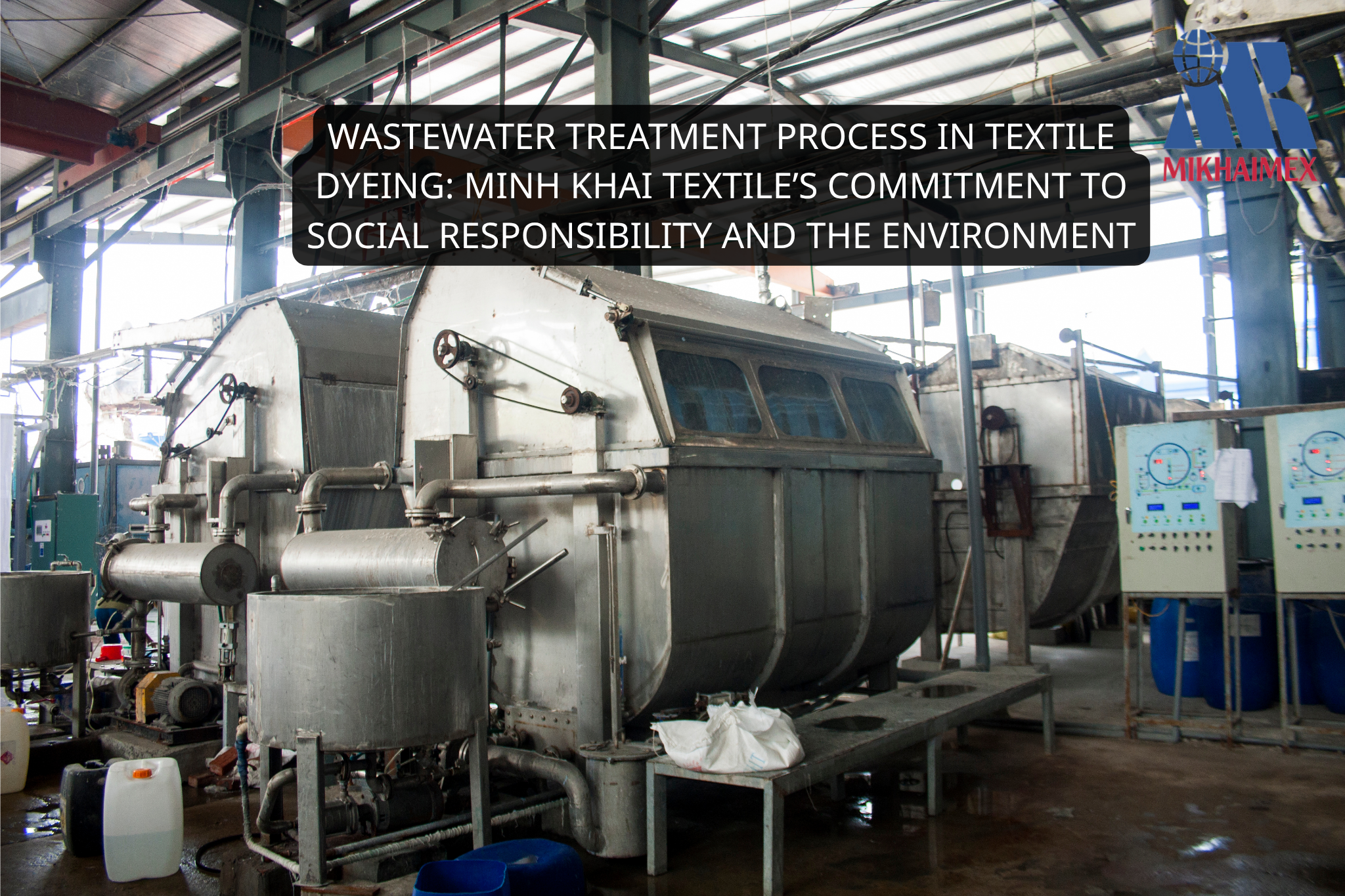
The textile dyeing industry is known as one of the most water-intensive industries with the most complex wastewater composition. Wastewater from cotton towel dyeing typically contains a mixture of persistent substances such as residual dyes, chemical aids, neutral salts, enzymes, and organic impurities separated from natural cotton fibers. If the wastewater treatment process in textile dyeing is not implemented professionally, these substances, when discharged into the environment, will change the pH of water sources, block photosynthesis of aquatic species, and directly harm human health through the food chain.
At Minh Khai Textile, we clearly recognize that corporate prosperity must go hand in hand with environmental vitality. Therefore, instead of using old technologies, Minh Khai has invested heavily in a closed-loop wastewater treatment system, where every stream of water, before being returned to nature, must undergo the strictest inspection steps. This not only helps us comply with the law but is also our way of thanking the community that has supported our brand for decades.
2.Details of the wastewater treatment process in textile dyeing at Minh Khai Textile
The wastewater treatment process in textile dyeing at Minh Khai is designed according to a multi-stage model, combining modern physicochemical and biological methods to thoroughly remove pollutants. This process typically includes the following core stages:
Pre-treatment and screening: Wastewater from cotton towel dyeing and washing machines is collected through drainage systems with fine screens. This step helps remove excess cotton fibers and solid waste to protect pumps and stirrers in later stages.
Equalization stage: This is a critical step to stabilize the flow rate and pollutant concentration. Since the dyeing process happens in batches, wastewater can be highly acidic or highly alkaline at times. The equalization tank will mix and balance the flow, helping the subsequent chemical and biological treatment steps occur stably, avoiding shocks to the microbial system.
Physicochemical treatment (Coagulation – Flocculation): Here, dyeing aids and part of the color are separated by adding safe coagulants. Tiny color particles will stick together into large flocs and settle at the bottom. Minh Khai Textile prioritizes using low-toxicity and highly degradable chemicals to avoid adding more burden to the waste sludge.
Biological treatment (Aerotank): This is the heart of the wastewater treatment process in textile dyeing. We use aerobic microorganisms to consume the remaining organic matter. Continuous aeration technology helps microorganisms work most efficiently, removing COD and BOD indicators effectively. Water after this step is almost transparent and free of chemical odors.
Final settling and filtration: Water from the biological tank will be directed through a settling tank to separate microbial sludge, then through a pressure filtration system with quartz sand and activated carbon to remove the last suspended solids before discharging into the receiving source.
3.Social responsibility commitment and green certificates of Minh Khai Textile
Operating a wastewater treatment process in textile dyeing transparently and effectively is the clearest proof of Minh Khai Textile’s social responsibility. We do not consider this a production cost but an investment in the future. Each Minh Khai bath towel or face towel delivered to consumers not only brings softness but also carries the peace of mind that the product was produced from a factory that is kind to the environment.
Thanks to the strict wastewater treatment process, Minh Khai’s products easily achieve international certificates such as Oeko-Tex Standard 100. This is evidence that the products do not contain harmful chemical residues, as a factory with a good wastewater treatment system is also a factory that strictly controls input chemicals. Our social responsibility is also reflected through regular training for the technical team operating the wastewater treatment plant, ensuring the system operates 24/7 with the highest performance.
4.Sustainable vision: Circular economy in the cotton towel industry
Not stopping at meeting standard wastewater treatment, Minh Khai Textile is moving towards a circular economy model, where treated wastewater can be reused for production stages that do not require pure water quality or used for watering greenery in the factory premises. The wastewater treatment process in textile dyeing now acts as a resource recycling station, helping to save precious fresh water and reduce long-term operational costs.
We believe that modern consumers, especially high-end hotel and resort partners, are increasingly concerned about the origin and process of product creation. A reputable specialist in cotton towel weaving must be a business capable of accounting for its environmental impact. Minh Khai Textile is confident that with every cubic meter of treated wastewater, we are contributing to preserving the blue of the rivers and the freshness of the living environment for future generations.
5.Conclusion and partnership with customers
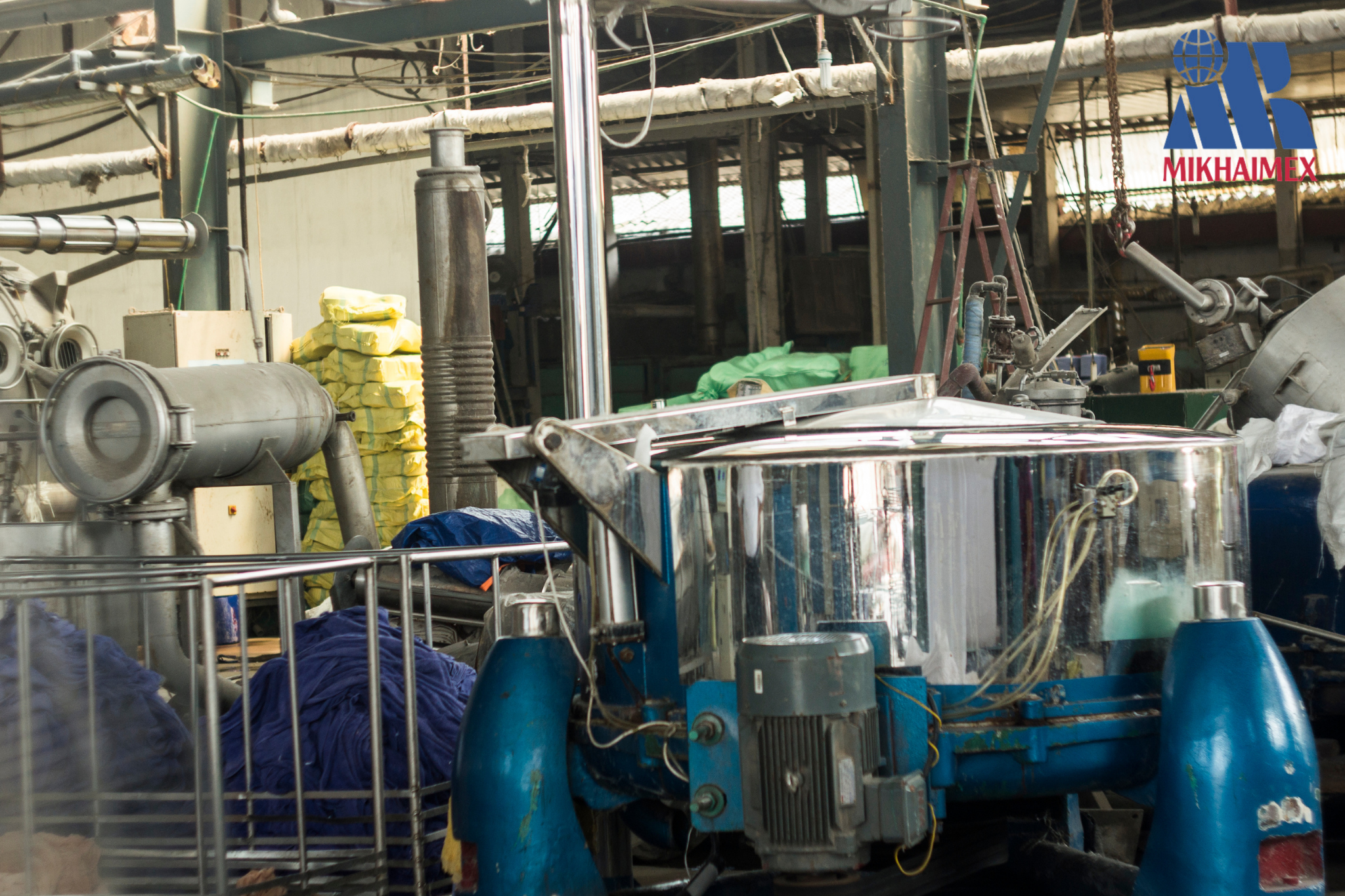
The wastewater treatment process in textile dyeing is the conscience filter of every textile business. At Minh Khai Textile, meticulousness lies not only in every stitch or the loftiness of the cotton towel but also in the cleanliness of the water after passing through the factory. We are committed to continuing to innovate technology and optimize processes so that every product bearing the Minh Khai brand is always a symbol of high quality associated with sustainable development.
Choosing Minh Khai Textile as your specialist in cotton towel weaving is choosing to partner with a responsible business, where every economic value is built on the foundation of environmental ethics. We are ready to welcome partners to visit our production process and environmental treatment system to clearly see the heart and dedication that Minh Khai has been implementing every day.