5 – Star Hotel Towel: The Rigorous Technical Requirements That Minh Khai Textile Must Meet
I. Definition and Importance of Quality in the High-End Hotel Towel Segment
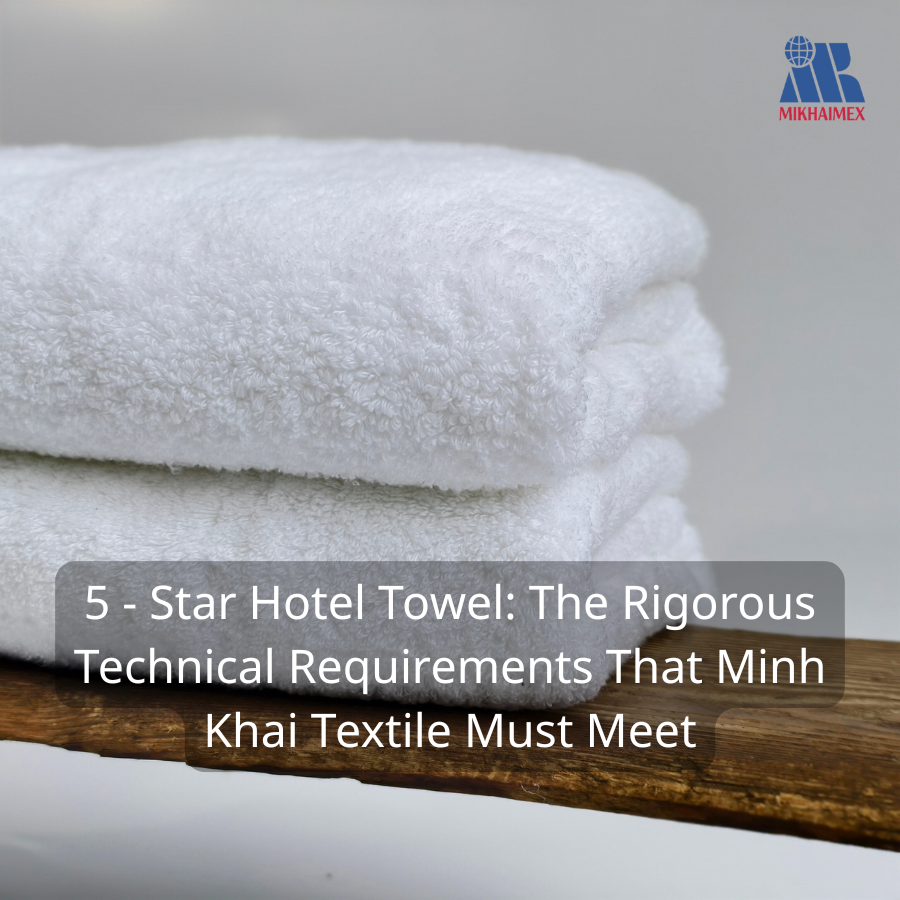
Cotton towels used in the 5-star hotel segment are not merely utility items but an indispensable part of the luxurious experience and service quality that the hotel brand guarantees. Customers choosing high-end accommodations expect a towel that is not only soft and thick but also durable, impeccably white, and capable of maintaining its perfect structure through hundreds of wash cycles. Therefore, the technical standards applied to hotel towel are significantly higher than those for typical household consumer towels.
The core difference lies in the harsh operating environment. Hotel towel must endure daily industrial washing frequencies, the use of strong chemicals (such as chlorine-based bleaches), and continuous high temperatures during both washing and drying. If the towels are not designed and manufactured with precise technical indices, they will quickly wear out, lose color, become stiff, thereby reducing their lifespan and directly impacting operational costs, as well as the hotel’s brand image. The ability of a textile manufacturer like Det Minh Khai to meet and maintain these rigorous standards is the decisive factor in becoming a trusted partner in the premium supply chain. Technical quality is not merely a selling point; it is a prerequisite for survival in the hotel towel segment.
II. Mandatory Technical Indices: GSM, Tensile Strength, and Colorfastness
To meet the standards of 5-star hotel towel, manufacturers must focus on three main technical indices:
1. GSM Index (Grams per Square Meter): For high-end hotel towel, the GSM must fall within the range of 650 to 900 GSM for the main bath towels. This high GSM index ensures maximum thickness, providing a luxurious, plush feel and superior water absorption capacity. However, high GSM also poses challenges regarding tensile strength and drying speed. To prevent thick towels from becoming overly heavy when wet and to facilitate drying, manufacturers must use long-staple cotton fibers to ensure the natural porosity of the fibers, thereby enhancing drying efficiency.
2. Tensile Strength and Abrasion Resistance: This is the most crucial index for hotel towel due to the high frequency of industrial laundering. The towel must be able to withstand the strong pulling force and friction of industrial washing machines without fiber breakage or tearing. This is controlled through:
* Fiber quality: Only long-staple cotton is used to ensure the strong structural integrity of the fibers.
* Weave structure: Applying double-loop terry or knitted terry techniques to enhance the robustness of the fiber loops.
* Heading/Selvedge weaving: The towel borders must be woven significantly stronger than consumer towels to prevent tearing and damage starting from the edges.
3. Colorfastness and Whiteness Index: For white hotel towel (the most common color), the challenge is maintaining brightness (often measured by the CIE Whiteness index) under the impact of chlorine bleach. The manufacturer must ensure:
* Whiteness maintenance: Cotton fibers must be thoroughly bleached using H2O2 during the pre-treatment process, before weaving.
* Color durability: For colored towels, the dyes used must be reactive dyes capable of resisting fading during high-temperature washing and strong chemical exposure. International standards typically require the towel to maintain a colorfastness level of 4-5 on the Grey Scale after numerous washes.
III. Production Process Optimized for Superior Durability
Creating standard-compliant hotel towel requires a strictly controlled production process, especially in stages involving high heat and chemical use:
1. Pre-Treatment: This is the most critical stage. Hotel towel must be thoroughly cleaned of wax, oil, and natural impurities on the fibers. The scouring and bleaching process must ensure deep cleaning of the fibers, enabling the towel to achieve instant absorbency while preserving mechanical strength. Advanced mills replace harsh alkali and chlorine-based cleaners with biological enzymes to treat the fibers more gently, minimizing damage to the cellulose structure.
2. Dyeing and Finishing: Hotel towel are often dyed at high pressure and temperature to ensure the dye deeply penetrates the fiber. After dyeing, the finishing stages must impart additional functional properties such as anti-shrinkage, anti-crease, and sometimes antimicrobial treatment. The use of excessive fabric softeners (silicone-based softeners) must be strictly controlled, as they can reduce absorbency and cause the towel to become water-repellent over time, despite initial perceived softness.
3. Loop Structure Control: In weaving hotel towel, manufacturers must ensure the fiber loops have an ideal height and are securely woven in place. Modern weaving machines must be precisely calibrated to create optimal fiber tension, preventing the loops from easily unraveling or being pulled out when the towel is exposed to razor blades or strong washing forces. This is a small technical detail that significantly determines the tear resistance and lifespan of the towel.
IV. Challenges in the Supply Chain and International Certifications
The production of high-end hotel towel must face numerous economic and compliance challenges:
1. Raw Material Stability: To maintain high GSM and tensile strength, manufacturers require a stable supply of high-quality long-staple cotton, often needing to be imported from reputable cotton-growing regions. Volatility in global cotton prices and trade barriers can heavily impact costs and competitiveness.
2. Energy and Environmental Management: The washing, dyeing, and drying processes for hotel towel consume significant amounts of water and energy. The mills must invest in internal wastewater recycling systems and transition to renewable energy sources (such as solar panels, biomass boilers) to reduce operating costs and comply with international environmental standards like Oeko-Tex Made In Green or GOTS (Global Organic Textile Standard).
3. Quality Certification Standards: International hotels require towels to meet stringent third-party certifications. Oeko-Tex Standard 100 ensures the towel is free from over 100 harmful substances, serving as a basic health criterion. Furthermore, towels must pass specialized tests for tensile strength, colorfastness, and shrinkage according to international standards such as ASTM or ISO. Achieving these certifications demonstrates the manufacturer’s comprehensive quality control capabilities.
V. Minh Khai Textile: Elevating Hotel Towel Production Standards in Vietnam
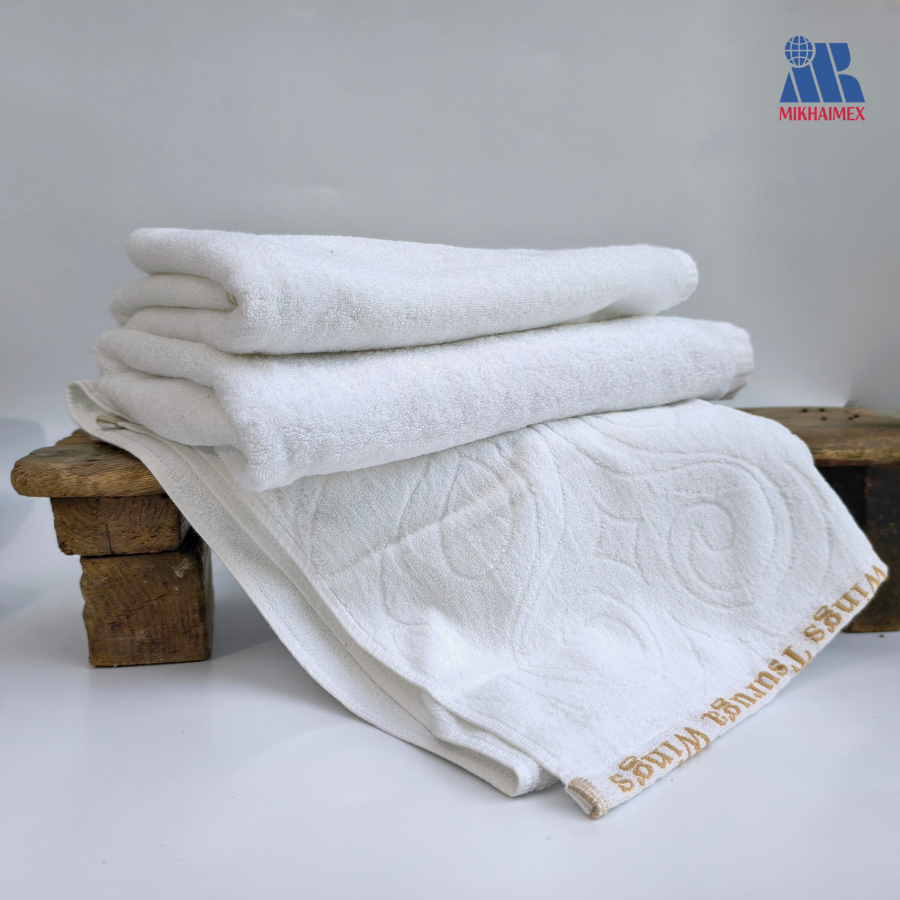
In Vietnam, Minh Khai Textile (Minh Khai Textile Import-Export Joint Stock Company – Mikhaimex) has established itself as a reputable supplier of hotel towel by successfully navigating rigorous technical requirements. Minh Khai clearly understands the difference between consumer towels and hotel towel, and has invested in optimizing its closed-loop production process.
Minh Khai specializes in manufacturing hotel towel with GSM consistently exceeding 650 GSM, utilizing long-staple cotton to ensure thickness and luxury. The core focus is on controlling Tensile Strength: The company continuously tests towel samples in its in-house laboratory to simulate industrial laundering conditions, ensuring the towels retain over 90% of their initial strength after hundreds of washes. The towel edges and headings are reinforced using specialized techniques to resist severe abrasion.
In chemical processing, Minh Khai prioritizes maintaining Whiteness Brightness and Colorfastness. The company employs advanced H2O2 bleaching procedures and uses imported reactive dyes, ensuring colored towels retain their shade and white towels do not yellow or suffer structural weakening upon contact with chlorine bleach. This strict control guarantees that Minh Khai’s hotel towel meet visual quality and longevity requirements.
Moreover, Minh Khai is committed to operational sustainability, mitigating environmental risks—a factor increasingly valued by international hotel chains. By combining extensive experience, investment in modern weaving technology, and strict adherence to technical indices, Det Minh Khai not only meets but elevates the standard for premium hotel towel in the Vietnamese and international markets, providing genuine value in quality and long-term cost-effectiveness for its partners.