THE SILENT IMPACT OF OVERUSING FABRIC SOFTENERS ON ABSORBENCY AND COTTON TOWEL LIFESPAN
1. Fabric Softener Usage Habits and Common Misconceptions
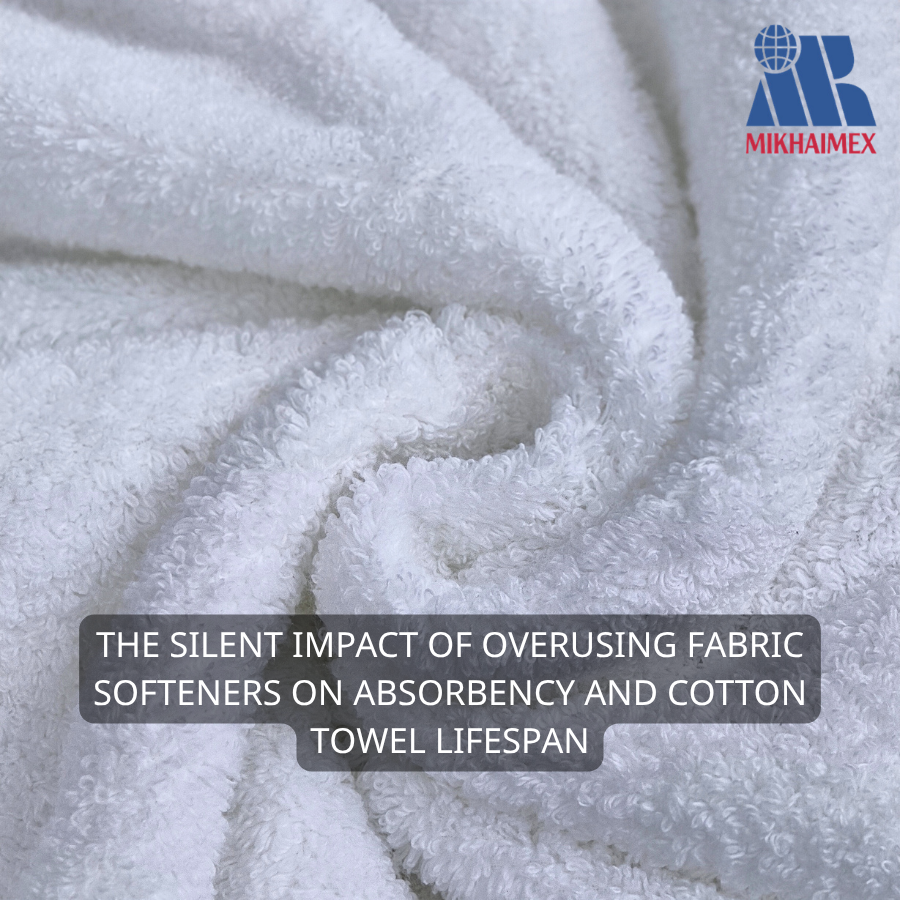
In household care or the operation of high-end establishments such as hotels and spas, there is a deep-rooted habit of using an excessive amount of fabric softener. The goal is often to maintain a lingering fragrance and a plush softness as if the towels were brand new. However, behind that pleasant scent lies a silent threat that negatively affects the fiber’s structural integrity and, more importantly, severely reduces the cotton towel lifespan. At Minh Khai Textile, a long-standing specialist in cotton towel weaving, we understand that a proper laundry process not only protects the user’s skin but is also a prerequisite for maintaining long-term product quality.
Many mistakenly believe that fabric softener is a “miracle cure” to keep towels new. In reality, from a technical standpoint, it is a highly coating chemical compound. When overused, these softening agents bond to the cotton fibers, creating an artificial feeling of softness while completely altering the natural physicochemical properties of the organic fibers. Understanding the true impact of laundry chemicals is the first step in protecting the cotton towel lifespan and optimizing long-term textile operational costs.
2. Impaired Absorbency Due to Chemical Coating
The most critical function of a bath or face towel is its ability to absorb water rapidly. High-quality towels from Minh Khai Textile are engineered with cotton fibers that have a naturally hollow structure, allowing water to wick into and be retained within the capillary gaps. Fabric softeners, by nature, are chemical coatings containing silicone particles or synthetic softening oils. When applied excessively, these active ingredients coat the surface of the cotton fibers, forming an invisible waterproof film.
As a result of prolonged overuse, the towel may appear soft to the touch, but when applied to the skin, it creates a sensation of water being repelled rather than absorbed. This is particularly problematic for premium towels used in spas, where instant dryness is a mandatory requirement. The buildup of this oily film not only degrades the user experience but also indirectly compromises the cotton towel lifespan as the fibers become saturated with chemicals and lose their natural self-cleaning ability during the wash cycle.
3. Reduction of Cotton Towel Lifespan Through Chemical Accumulation
A common fallacy is that making a towel softer makes it more durable. From a textile engineering perspective, the opposite is true. As chemical layers thicken after each wash, they cause the cotton fibers to mat together, losing their inherent natural elasticity. Over time, these fibers become heavier, lose their flexibility, and become extremely prone to snapping under the centrifugal force of high-speed spinning or the thermal stress of industrial dryers. This is the core reason why the cotton towel lifespan is significantly shortened, leading to premature fraying or tearing after only a few months of use.
Furthermore, the accumulated film of fabric softener becomes an ideal breeding ground for bacteria and mildew. When chemicals envelop the fibers, they prevent air circulation through the cotton’s pores, causing the towel to take longer to dry and developing a characteristic musty odor. For hotel businesses, a shortened cotton towel lifespan not only wastes investment capital but also diminishes service quality. A towel matted with chemical buildup can never achieve the natural loft and fluffiness that meets Minh Khai Textile’s standards.
4. Negative Impacts on Linting and Respiratory Health
Another often-overlooked side effect is that fabric softeners can increase linting or “fiber shedding.” While chemicals initially seem to bind loose fibers together for a smooth surface, the long-term loss of natural bonding under the influence of softening agents makes the fiber ends more brittle and prone to detachment. This silently reduces the cotton towel lifespan and creates airborne lint, which can irritate individuals with sensitive skin or respiratory conditions.
At Minh Khai Textile, we strictly advise customers to minimize the use of synthetic fabric softeners to maintain the cotton’s purest state. Keeping the fibers from being “suffocated” by chemicals is the best way to ensure health safety and maintain the cotton towel lifespan at its peak. A safe textile product must retain its natural integrity from the factory floor to the consumer’s home.
5. Alternative Solutions and Minh Khai Textile’s Commitment
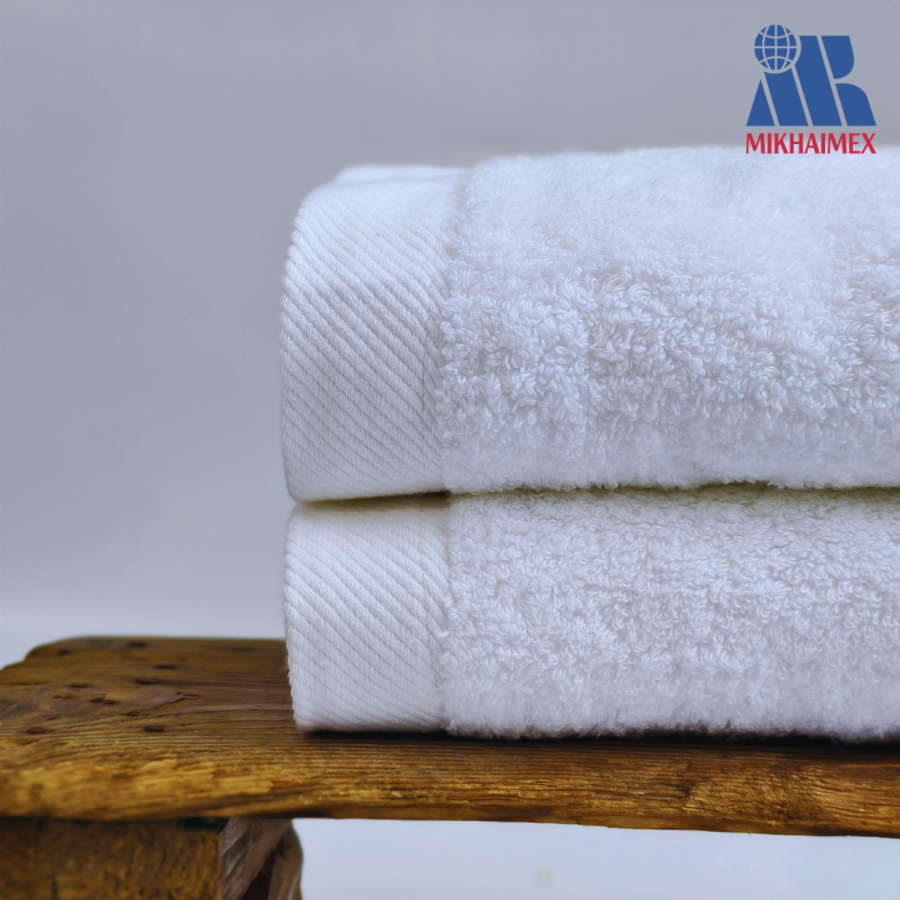
To keep towels soft without relying on excessive chemicals, you can apply simple technical tips from Minh Khai Textile’s experts. Using a small amount of white vinegar in the final rinse is an excellent way to neutralize detergent residue and naturally soften the fibers without harming the cotton towel lifespan. Additionally, utilizing a dryer at moderate heat settings allows the cotton fibers to bloom, creating a natural loft without the need for synthetic softening oils.
Minh Khai Textile does not just focus on production volume; we accompany our customers in extending the cotton towel lifespan. We believe that sustainability begins with ethical manufacturing and continues through careful consumer maintenance. Understanding the harm of fabric softeners is the key to preserving the value of every towel, reducing environmental waste, and saving costs. Let Minh Khai Textile provide you with total peace of mind through pure, durable, and safe cotton fibers for your entire family.