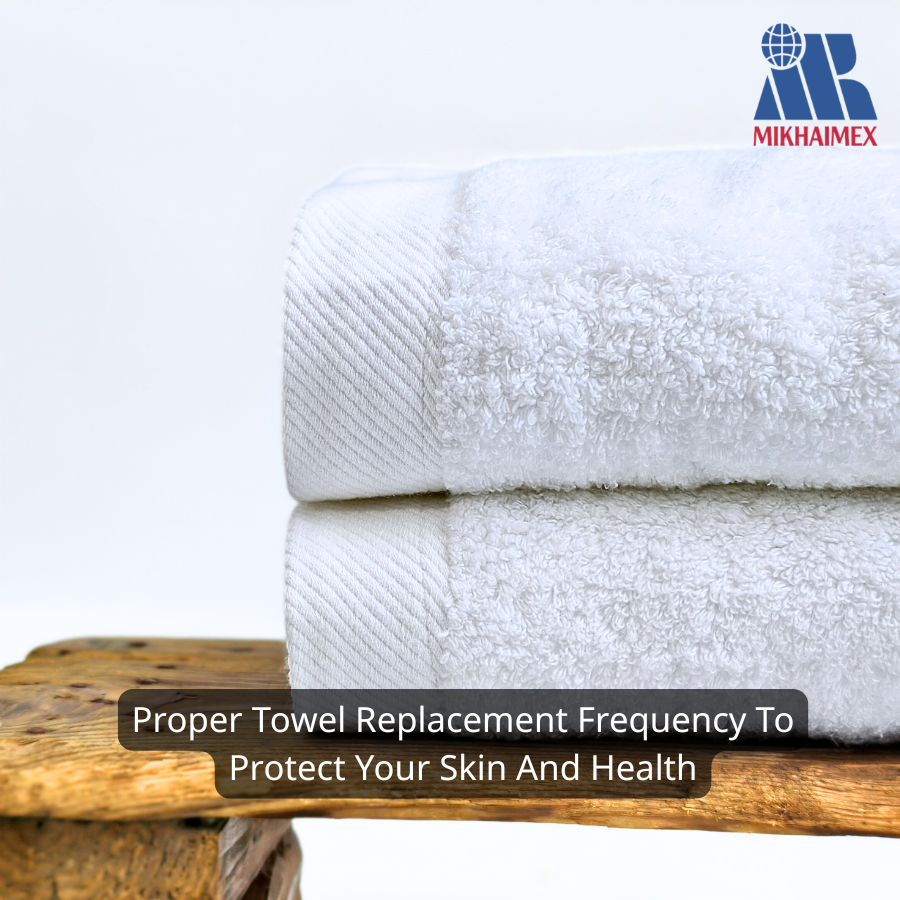
Proper Towels Replacement Frequency To Protect Your Skin And Health
1. Why an old towel is a silent enemy to your skin
If the towel is not thoroughly washed and dried, the bacterial count can multiply exponentially after just a few days. When you continue to use this contaminated towel on your skin—especially on sensitive facial areas or open wounds—bacteria can re-enter your skin pores. This is a primary cause of acne breakouts, folliculitis, skin allergies, or eye infections like conjunctivitis. Therefore, even if a towel looks visually clean, it is time for a replacement if it has accumulated too many pathogens.
2. The ideal washing frequency and replacement timeline for towels
In addition to weekly washing, the timeline for complete replacement is a vital factor for skin health. The ideal lifespan of high-quality towels used at home typically ranges from three to six months. After this period, even if the towel does not appear torn or damaged to the naked eye, you should proactively replace it. The reason is that after hundreds of wash-and-dry cycles and continuous exposure to detergent chemicals, natural cotton fibers become brittle and lose their original hollow structure, causing the towel to become coarse, stiff, and significantly less absorbent.
3. Warning signs that your towel has reached its expiration date
Another clear warning signal comes from alterations in the woven surface structure, where the loops become flattened, matted, and rough. Insisting on using these coarse towels will inadvertently create heavy friction on the skin, damaging the natural skin barrier, making it prone to redness and irritation, and accelerating the aging process. Furthermore, when a towel is past its prime, you will notice a severe drop in its absorbency; instead of drying your body quickly, the towel tends to push water puddles around your skin, creating a highly uncomfortable sensation.
4. Tips for choosing high-quality towels to extend their lifespan
In addition to the material, pay close attention to the GSM (grams per square meter) weight rating. A home-use towel should have a rating between 400 and 500 GSM. This density ensures that the towel is thick enough to absorb water efficiently yet dries quickly, reducing the risk of bacterial buildup compared to the overly thick towels typically found in hotels. Moreover, the double-loop weaving technique provides a more durable fabric structure, allowing the towel to withstand frequent washing cycles at home without fraying or shedding.
5.Minh Khai Textile and the mission to accompany Vietnamese family health
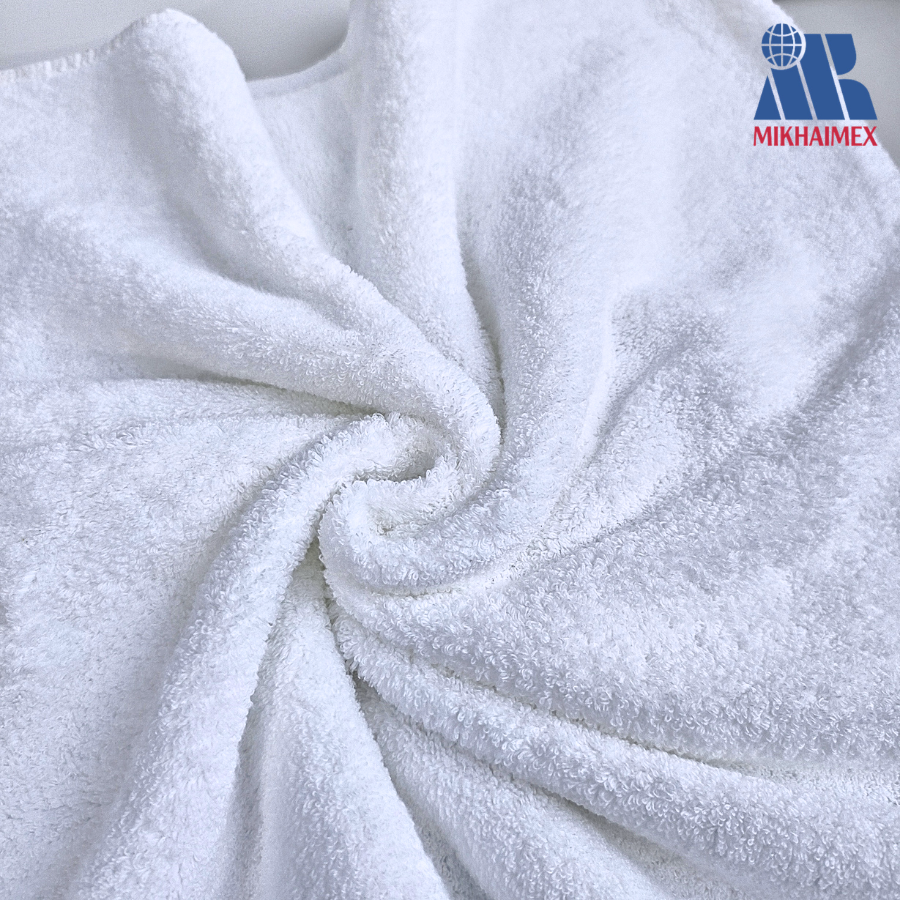
The towels manufactured by Minh Khai are produced on modern technological lines, strictly controlled from raw cotton selection to the final finishing and dyeing processes to meet international safety standards. Minh Khai towels are renowned for their natural fluffiness, superior absorbency, and incredible durability over multiple washes. The company is committed to using clean raw materials free from toxic chemicals or optical brighteners, ensuring absolute safety for even the most sensitive skin, such as a baby’s skin.