Minh Khai Textile Confronts Global Cotton Price Challenges: Supply Stability Strategy and Product Overview
I. Context of Volatility: The Global Cotton Price Challenge for the Textile Industry
Cotton is an essential input, accounting for a large portion of the cost of goods sold in the towel textile industry. Consequently, the fluctuation of the cotton price in the global market is not just a macroeconomic issue but a vital challenge to the profitability and competitiveness of textile manufacturers, including Minh Khai Textile . In recent years, the commodities market has witnessed sudden surges and drops in the cotton price, driven by complex factors ranging from extreme weather conditions in major cotton-growing regions like the US, India, and China, to trade policies and the global recovery or decline in consumer demand.
The sharp volatility of the cotton price creates significant cost management risks for businesses. When the cotton price increases sharply, the cost of towel production rises proportionally, forcing companies to face a difficult choice: raise selling prices to preserve profit margins, risking market share loss; or maintain prices, accepting compressed profits. Conversely, when the cotton price drops significantly, manufacturers who stockpiled raw materials at high prices face difficulties competing with rivals whose input costs are lower. For a large-scale company focused on high quality like Minh Khai Textile , maintaining stable sourcing and controlling the inbound cotton price is a top priority to fulfill commitments regarding pricing and delivery timelines with international hotel and export partners.
II. Key Factors Influencing Cotton Price and the Supply Chain
The complex fluctuation of the cotton price results from the interaction between global supply and demand factors:
1. Climate Conditions and Seasonality: Cotton is a weather-sensitive crop. Prolonged droughts or abnormal floods in key production areas like Texas (USA), Gujarat (India), or Xinjiang (China) can significantly reduce harvest yields, immediately driving the cotton price upward. Crop forecast reports from the USDA (US Department of Agriculture) and the ICAC (International Cotton Advisory Committee) are crucial information sources that textile companies must closely monitor to predict cotton price trends.
2. Trade Policies and Tariffs: Trade wars or agricultural subsidy policies of major nations can alter the global flow of cotton, directly affecting the cotton price and import costs for cotton-dependent countries like Vietnam. For instance, the imposition of tariffs or rules of origin regulations can disrupt traditional supply chains.
3. Exchange Rates and Transportation Costs: Since cotton is traded in US dollars, fluctuations in exchange rates can change the real cost of the raw material for manufacturers in Vietnam. Furthermore, rising logistics and sea freight costs (especially following global supply chain shocks) add a substantial burden to the inbound cotton price.
4. Competition with Synthetic Fibers: Market demand also plays a role in regulating the cotton price. When the cotton price becomes excessively expensive, manufacturers tend to switch to cheaper synthetic fibers like polyester or recycled fibers, reducing demand pressure on cotton and potentially causing the cotton price to adjust downward. However, in the premium and hotel towel segments, which require 100% natural cotton, this substitution capability is limited.
III. Cotton Price Risk Management Strategy for Textile Enterprises
To cope with the instability of the cotton price, textile companies need to implement a flexible and multi-faceted risk management strategy:
1. Supply Diversification: Avoiding reliance on one or two suppliers/countries. Sourcing cotton from various markets (such as the US, India, Brazil, Australia, African nations) helps mitigate risk when a region faces crop failure or policy issues. Diversification also allows the company more flexibility in selecting fiber types with the quality and cotton price suitable for each product segment.
2. Commodity Hedging Strategy: This is a professional method for locking in costs. Large companies can use futures contracts on commodity exchanges like ICE Futures US to fix the cotton price for future orders. In this way, they protect themselves from sudden spikes in the cotton price in the short term, ensuring stable profit margins for signed contracts.
3. Optimal Inventory Management: Maintaining a strategic raw material inventory is necessary. However, excessive stockpiling when the cotton price is at its peak can lead to significant losses. Managers must balance the stockout risk and the storage cost/price decline risk. Using accurate demand forecasting systems and optimizing the supply chain are key.
4. Long-Term Contracts with Customers: Signing long-term supply contracts with price adjustment clauses based on the market cotton price index allows the business to transparently transfer a portion of the cotton price volatility risk to the customer, ensuring stability for both parties.
IV. Impact of Cotton Price on Cost Structure and Product Innovation
The volatility of the cotton price not only affects direct raw material costs but also extends to the entire production cost structure and product innovation strategy of the enterprise:
1. Challenges in the High-Quality Segment: In the 5-star hotel towel segment, which requires long-staple cotton (with a higher cotton price), the cost pressure is even greater. Companies cannot easily substitute fiber types to cut costs but must seek to optimize fiber utilization efficiency, minimize waste, and increase machine productivity to offset the increased inbound cotton price.
2. Alternative Material Innovation: When the cotton price is at an unsustainable level, manufacturers actively seek composite fibers or eco-friendly bio-based fibers such as Tencel, Modal, or bamboo fiber. While these fibers often come with a higher price tag than regular cotton, they offer superior properties in terms of softness and colorfastness, simultaneously helping the company diversify its supply base and reduce dependency risk on pure cotton price volatility.
3. Optimization of Weaving Technique: To reduce the amount of cotton required while maintaining thickness and hand-feel, factories invest in Zero Twist or Low Twist weaving technology. These techniques help the towel become fluffier and lighter, reducing the necessary cotton mass per square meter (GSM) without diminishing the premium feel, thereby mitigating the impact of the cotton price on the final product cost.
V. Minh Khai Textile : Supply Stability Strategy, OEM/ODM Capability, and Key Product Focus
Criteria for Choosing Towels for Hotels and Homestays – Small Investment, Big ImpactSome Tips for Choosing Cotton Towels for Sensitive Skin – Protecting Your Skin from the Smallest Things
Minh Khai Textile Import-Export Joint Stock Company (Mikhaimex). with its premium towel product portfolio and focus on exports, controlling cotton price risk is a strategic management function. Minh Khai has implemented a stringent supply chain management system, simultaneously developing strategic product lines to secure its market position and fully leverage its production capacity.
Cotton Price Management Strategy: Minh Khai applies a strategic inventory management model based on market and customer demand forecasts, maintaining a reasonable “buffer” inventory to hedge against short-term cotton price volatility. The company also proactively diversifies its long-staple cotton sourcing from multiple countries to reduce concentration risk. For large orders, a flexible price adjustment mechanism based on the cotton price index is applied in long-term contracts, fostering transparency and sustainable partnership.
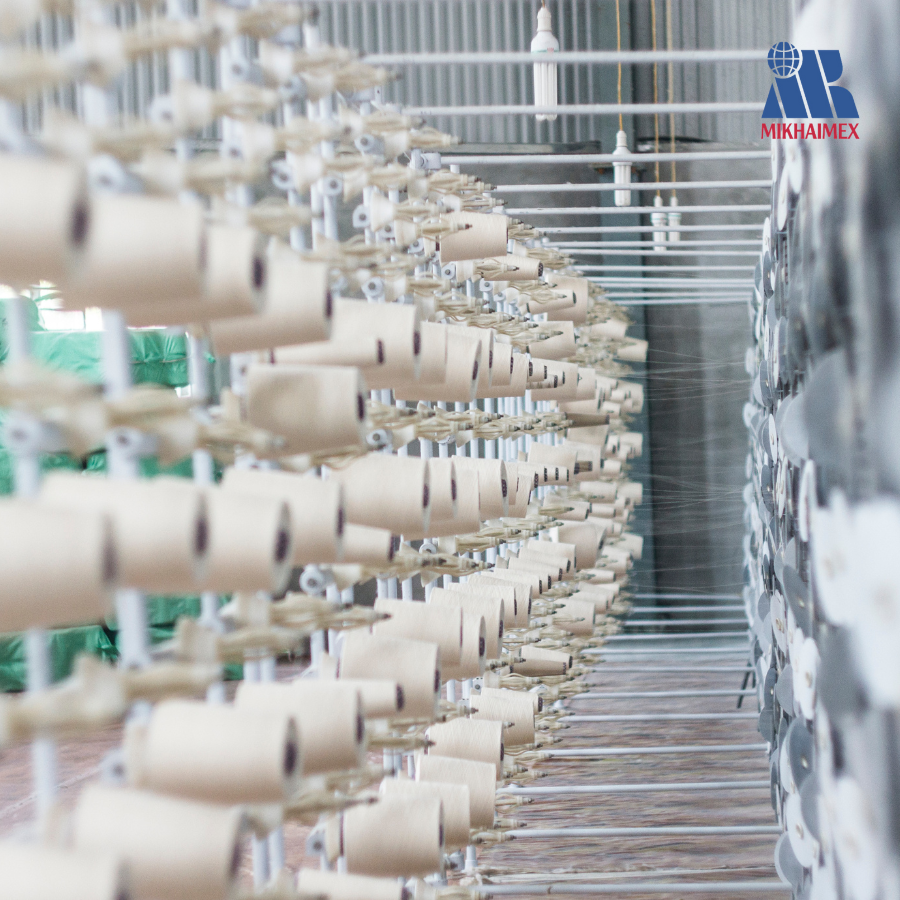
OEM/ODM Manufacturing Capability: Thanks to its modern, closed-loop production capacity and strict quality control (certified to ISO 9001 and Oeko-Tex), Minh Khai Textile also serves as a strategic contract manufacturing partner (OEM/ODM) for many international and domestic textile brands. The company owns an integrated line from weaving (shuttle and knit), dyeing, finishing, and final garment sewing. This allows Minh Khai the flexibility to accept custom full-package manufacturing orders (OEM/ODM) for towels based on specific customer technical requirements and designs, ranging from special fiber selection (organic cotton, Tencel) to the application of functional finishing technologies (antimicrobial, permanent softening). Maximizing utilization through contract manufacturing also helps the company allocate fixed costs more efficiently, indirectly mitigating the negative impact of the cotton price on Minh Khai’s product pricing.
Minh Khai Textile ‘s Key Product Lines: Det Minh Khai focuses on two main product segments where quality and durability are paramount, enabling the company to absorb cotton price fluctuations more easily due to the products’ added value:
1. Hotel and Resort Towels (Hospitality Line): This is the flagship product line. Towels are manufactured to high GSM standards (often over 650 GSM), using Pima or Supima cotton to ensure tensile strength and the ability to withstand harsh industrial laundering processes (strong chemicals and high temperatures). Products include bath towels, hand towels, bath mats, and bathrobes, designed to maintain whiteness and stable fiber structure over hundreds of washes.
2. Premium Retail and Export Towels (Premium Retail & Export Line): This product line focuses on softness experience and sustainability. Minh Khai has developed towels using Zero Twist technology or Tencel/Modal fibers, providing exceptional softness and faster drying times compared to traditional 100% cotton of the same GSM. These products often meet international certifications for safety (Oeko-Tex Standard 100) and sustainability (GOTS), serving demanding export markets like Japan and Europe. Fiber diversification helps the company mitigate the risk of pure cotton price volatility and meet market demands for eco-friendly products.
Det Minh Khai’s overall strategy is to transform the cotton price challenge into a driving force for internal management optimization, continuous investment in advanced weaving and dyeing technology to enhance raw material utilization efficiency, and the development of a premium product portfolio alongside expanding contract manufacturing capabilities, thereby affirming its leading position in quality and sustainability.