Maintenance and Extending Towel Lifespan: Tips from Det Minh Khai Textile Manufacturers
I. The Relationship Between Manufacturing Quality and Towel Lifespan
Cotton towels, even those produced from the highest quality raw materials, are ultimately consumable products subject to wear and tear over time. However, the greatest difference between high-quality and conventional towels lies in their potential for extended Towel Lifespan. Professional textile manufacturers understand that to ensure optimal Towel Lifespan, the process must begin with fiber selection and weaving techniques. Long-staple cotton fibers like Supima or Egyptian Cotton offer superior tensile strength compared to short-staple fibers, making the towels less prone to tearing, shedding, or fiber breakage after numerous wash cycles.
Weaving technique also plays a crucial role. High fiber density (high GSM) creates a more robust structure, offering better resistance to friction in the washing machine. Conversely, loosely woven towels with low GSM quickly lose their shape and softness. Furthermore, the application of stringent quality standards, such as using reactive, heavy metal-free dyes, ensures the towel retains its original color and fiber structure, directly contributing to extending the Towel Lifespan. Therefore, maintenance from the consumer’s side is not just about preserving the aesthetic appearance; it is an act of preserving the technical quality built into the product by the manufacturer.
II. Key Factors Causing Deterioration of Quality and Towel Lifespan
The decline in quality and Towel Lifespan primarily stems from three main causes: mechanical abrasion, chemical damage, and residue buildup.
Mechanical abrasion occurs mainly during washing. The friction and strong spinning forces in the washing machine cause the fiber loops to break, leading to pilling and thinning of the towel. High washing frequency, especially in hotels and resorts where towels are washed daily, puts immense stress on the fiber durability.
Chemical damage often results from using inappropriate detergents. Chlorine bleach is the biggest enemy of cotton fiber because it weakens the cellulose structure, making the towel brittle, prone to tearing, and causing a loss of softness. Similarly, an excessive amount of fabric softener can create a waxy coating on the fibers, reducing absorbency and making the towel stiff over time. Excessively hot water during washing and drying can also cause fiber shrinkage, alter the weave structure, and significantly shorten the Towel Lifespan.
Residue buildup includes soap residue, minerals from hard water, and organic grime from the body. This accumulation causes the towel to become dull, develop unpleasant odors, and reduce its absorbency. Many consumers often use more soap to address this issue, but this only accelerates the residue buildup, creating a vicious cycle that diminishes quality and Towel Lifespan.
III. Detailed Expert Guidance: Towel Washing and Storage Procedures
To maximize the Towel Lifespan, consumers must adhere to a scientifically proven washing and storage routine, which differs significantly from common laundry habits:
1. The First Wash (Break-In Wash): Newly purchased towels often have a light chemical finishing layer (sizing agents) to hold their shape. The first wash should be done in cold or lukewarm water, without using fabric softener. A small cup of white vinegar can be added to help “lock in” the dye color and activate the fiber’s absorbency. This step lays the foundation for a resilient Towel Lifespan.
2. Sorting and Washing Machine Settings: Always wash towels separately from other clothing (such as clothes with zippers or hooks) to prevent mechanical abrasion. Use a gentle cycle or a dedicated setting for home textiles. Crucially, do not overload the washing machine, as this increases friction and reduces cleaning efficiency, making residue removal difficult.
3. Detergent Selection: Avoid chlorine bleach. Instead, use oxygen-based bleaches when necessary to brighten white towels. Use only the necessary amount of powder/liquid detergent; overdosing is a common mistake that shortens the Towel Lifespan. Substitute fabric softener with white vinegar: add half a cup of white vinegar to the rinse cycle every few weeks. Vinegar acts as a natural softener, removing soap residue and mineral deposits without diminishing the fiber’s absorbency.
4. The Ideal Drying Process: Over-drying is the leading cause of fiber damage and shrinkage. Always use low or medium heat when drying. When the towel is nearly completely dry (still slightly damp), remove it from the dryer and air-dry it naturally. This helps prevent shrinkage, reduces energy consumption, and maintains softness, thereby extending the Towel Lifespan. Sun-drying is also an effective natural sterilization and whitening method.
IV. Troubleshooting Common Towel Issues (Problem-Solving)
Even when following the recommended routine, towels may encounter some common problems:
1. Towel Stiffness and Reduced Absorbency: This issue is usually due to the buildup of soap and mineral residues. The solution is to perform a “Towel Stripping” process: Wash the towels once with hot water and a small amount of white vinegar (no detergent), then wash them a second time with hot water and half a cup of baking soda (no detergent). These two cycles help thoroughly remove the layers of buildup that cause stiffness.
2. Excessive Towel Shedding/Pilling: Shedding is inevitable during the first few washes, but if it persists, it is a sign of poor fiber quality or excessive mechanical wear. To limit this, avoid washing towels with clothes that have hooks or zippers. If the towel has pills in one area, use scissors to snip them off instead of pulling them out, which prevents the fiber breakage from spreading and preserves the Towel Lifespan.
3. Towel Odor (Musty Smell): Odor often results from the towel remaining damp for too long after use. To eliminate it, wash the towels in hot water combined with a cup of white vinegar. Then, dry them completely immediately. Always ensure towels are fully dry before storing or reusing them. Never leave wet towels in the washing machine or laundry basket for an extended period.
V. Minh Khai Textile: Commitment to Extending Towel Lifespan for Vietnamese Consumers
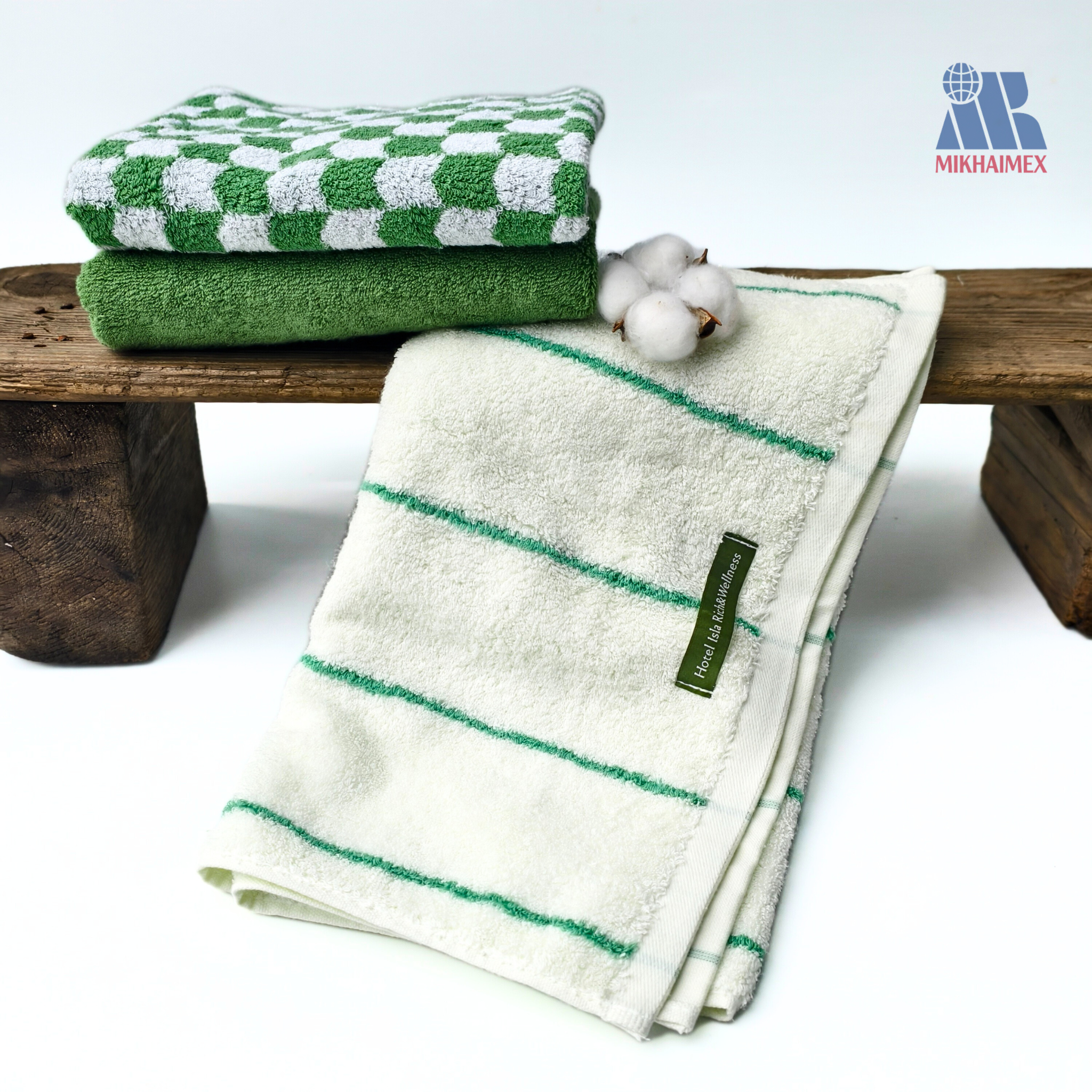
In Vietnam, Minh Khai Textile (Minh Khai Textile Import-Export Joint Stock Company – Mikhaimex) is one of the pioneering manufacturers that not only supplies Towels products but also provides solutions to extend the Towel Lifespan for its customers. With a long history dating back to the 1960s, Minh Khai understands that product quality must be coupled with sustainable usage guidelines.
Minh Khai utilizes premium long-staple cotton fibers and advanced double-loop weaving technology to produce towels with superior mechanical durability. This is especially crucial in the 4-5 star hotel segment, where towels must withstand over 300 cycles of industrial washing with strong chemicals and high heat while maintaining their structure. Precise weaving technology helps Minh Khai towels maintain uniform GSM density and resist shedding caused by wear and tear.
In the manufacturing process, Minh Khai commits to using high-quality reactive dyes and standardized finishing procedures, helping the towels retain their color and fiber structure stability, which is the foundation for an extended Towel Lifespan. The company also proactively uses biological enzymes in the pre-treatment phase, which helps remove natural impurities more gently than harsh chemicals, ensuring the fibers are deeply cleaned but not weakened, thereby enhancing the towel’s resilience.
Minh Khai further provides detailed instructions and clear care labels on every product, advising customers to avoid chlorine bleach and encouraging washing at warm or cold temperatures to protect the fibers. By combining rigorous technical quality control in production and communicating accurate maintenance knowledge, Det Minh Khai not only sells towels but also sells durability and a commitment to a long Towel Lifespan, enhancing the value of use for consumers and hotel partners alike.