OPTIMIZING FTA BENEFITS TO BOOST VIETNAM TOWEL EXPORT TURNOVER
I. STRATEGIC VISION AND POSITION OF VIETNAM TOWEL INDUSTRY IN THE INTEGRATION ERA
In the process of industrialization and modernization, Vietnam towel industry has emerged strongly as an indispensable link in the global textile supply chain. No longer confined to small-scale household production or domestic markets, the towel industry is now positioned as a key export sector with high added value. The deep integration of Vietnam into the global economy, particularly through the signing and implementation of new-generation Free Trade Agreements (FTA), has created a fresh impetus, helping Vietnam towel industry explore unprecedented potential.
For Vietnam towel industry, FTAs are not merely legal documents on tariff reductions but a comprehensive strategy to enhance national competitiveness. In the context where major competitors like India or Pakistan have advantages in domestic cotton sources, Vietnam towel industry chooses a different path by leveraging incentives from EVFTA, CPTPP, and RCEP to penetrate high-end markets. Optimizing benefits from these agreements helps Vietnam towel industry reduce cost burdens while driving businesses to innovate, invest in technology, and adopt sustainability standards to meet strict technical barriers.
Currently, Vietnam towel industry stands before a golden opportunity as investment capital shifts to Southeast Asia. Understanding the operation of each FTA will be the key for manufacturers to not only increase export turnover but also build a reputable, high-quality, and environmentally friendly Vietnam towel brand on the global map. This is the crucial time to weave towel lines bearing Vietnamese labels that reach further into the international market.
II. TARIFF ADVANTAGES FROM FTA FOR TOWEL PRODUCT LINES
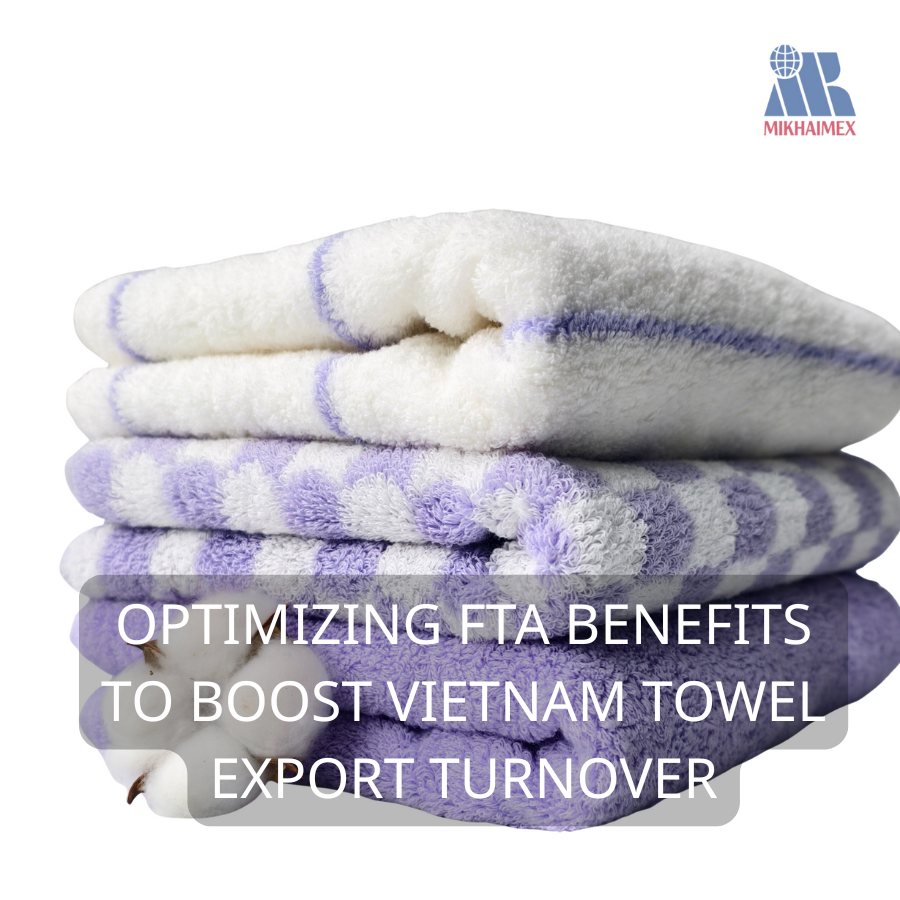
Vietnam towel industry possesses a diverse portfolio of FTAs, creating an exclusive advantage over many competitors in Asia. Each agreement opens a specific tariff reduction roadmap for exported towel lines, directly enhancing price competitiveness.
The Free Trade Agreement between Vietnam and the European Union (EVFTA) is considered the biggest push. Before this agreement, Vietnam towel exports to the EU faced relatively high tariff rates, reducing competitiveness against rivals enjoying the Generalized System of Preferences (GSP). When EVFTA took effect, tariffs on many towel items were eliminated immediately or according to a short-term roadmap. This helps Vietnam towel industry easily access countries with high living standards such as Germany, France, and the Netherlands, where demand for premium towels for households and hotels is immense.
The Comprehensive and Progressive Agreement for Trans-Pacific Partnership (CPTPP) brings opportunities in emerging markets such as Canada and Mexico, while consolidating the position in Japan. For Japan, an extremely demanding market regarding quality, the fact that Vietnam towel exports enjoy 0% tariffs has helped maintain a stable market share and sustainable growth. CPTPP also drives Vietnam towel industry to improve production processes to meet the yarn forward rule of origin, significantly increasing the domestic value of the products.
The Regional Comprehensive Economic Partnership (RCEP) and agreements with ASEAN countries help Vietnam towel industry optimize the raw material supply chain. Importing high-quality cotton yarn from RCEP member countries to weave towel lines and re-exporting within the bloc with preferential tariffs has significantly reduced input costs, increasing flexibility for towel manufacturing enterprises in Vietnam.
III. RULES OF ORIGIN AND RAW MATERIAL SELF-SUFFICIENCY STRATEGY IN THE TOWEL INDUSTRY
The biggest challenge for Vietnam towel industry to fully enjoy incentives from FTAs is the rules of origin. Agreements like EVFTA and CPTPP apply double transformation or yarn forward rules, requiring weaving and finishing, or even spinning, to be performed within the bloc. This requires Vietnam towel industry to fundamentally change its supply chain structure to ensure the validity of Certificates of Origin (C/O).
Previously, Vietnam towel industry depended significantly on imported cotton yarn from non-FTA countries. However, to maximize benefits, the trend of self-sufficiency in raw materials is gradually replacing imported sources. Currently, Vietnam is strongly developing cotton-growing areas to serve the textile industry development and attracting large-scale spinning projects. When Vietnam towel industry becomes self-sufficient in yarn, it not only helps meet rules of origin to enjoy 0% tariffs but also helps businesses actively control quality from the source and shorten Lead Time.
Investing in modern towel factories capable of producing from finished yarn helps Vietnam towel industry create a closed-loop cycle. This is extremely important for functional and high-end towel lines, where yarn uniformity directly determines the softness and absorbency of the final product. The raw material self-sufficiency strategy is the solid foundation for Vietnam towel export turnover to grow substantially and remain independent of fluctuations from external supply markets.
IV. ELEVATING TECHNICAL QUALITY AND GREEN STANDARDS IN TOWEL PRODUCTION
To utilize FTAs effectively, Vietnam towel industry cannot rely solely on tariff advantages but must depend on stable technical quality and compliance with sustainable standards. International markets, especially those participating in EVFTA, increasingly focus on circular economy, social responsibility, and environmental protection throughout the production process.
Vietnam towel industry has made great strides in applying new technology. Techniques such as Jacquard weaving for exquisite patterns, finishing dyeing technologies that prevent color bleeding, or Zero Twist weaving to create maximum fluffiness for towels have become popular. Additionally, towel manufacturing enterprises in Vietnam clearly recognize the importance of international certifications such as Oeko-Tex Standard 100 and GOTS. These certifications are powerful passports helping Vietnam towel industry overcome technical barriers of FTAs, proving that products contain no harmful chemicals and are completely safe for users.
Green production is also a mandatory requirement to maintain export turnover. Vietnam towel industry is shifting toward using renewable energy and modern wastewater treatment systems to reuse water in the dyeing process. Using sustainable fibers such as Bamboo, Modal, Tencel, or organic cotton yarn not only helps Vietnam towel industry meet FTA rules of origin but also creates a strong marketing advantage, attracting customer groups willing to pay higher prices for humane and environmentally protective products.
V. SOLUTIONS FOR SUSTAINABLE VIETNAM TOWEL EXPORT TURNOVER GROWTH
To truly break through and boost Vietnam towel export turnover through FTAs, a synchronous coordination between the State and businesses is needed with specific solutions as follows:
First, strengthen specialized trade promotion for the towel industry. Instead of general textile promotion, there should be programs introducing Vietnam towel production capacity at global home textile trade fairs in Frankfurt (Germany) or New York (USA). Asserting strengths in hotel towels, gift towels, and spa towels will help businesses find the right strategic partners in FTA regions.
Second, promote digital transformation in towel production management. Applying supply chain management software helps businesses easily trace the origin of raw materials, a mandatory requirement of international Customs authorities when reviewing FTA tariff preferences. This also helps minimize errors in Certificates of Origin, ensuring the flow of Vietnam towel goods is always smooth at international borders.
Third, focus on training high-tech human resources for the towel industry. Towel weaving workers need specialized training to operate the most modern rapier and air-jet weaving machines. At the same time, design teams must keep up with color and style trends in European and Japanese markets to create towel collections with high aesthetic value, suitable for the diverse tastes of international consumers.
Finally, building concentrated towel industry clusters will help optimize wastewater treatment and logistics costs. Close links between factories in the same area will create synergistic strength, helping Vietnam towel industry achieve enough scale to accept super-large orders from international retail groups within the FTA bloc, thereby raising export turnover to new heights.
VI. MINH KHAI TEXTILE FACTORY: PIONEER IN TOWEL EXPORT STRATEGY ACCORDING TO FTA STANDARDS
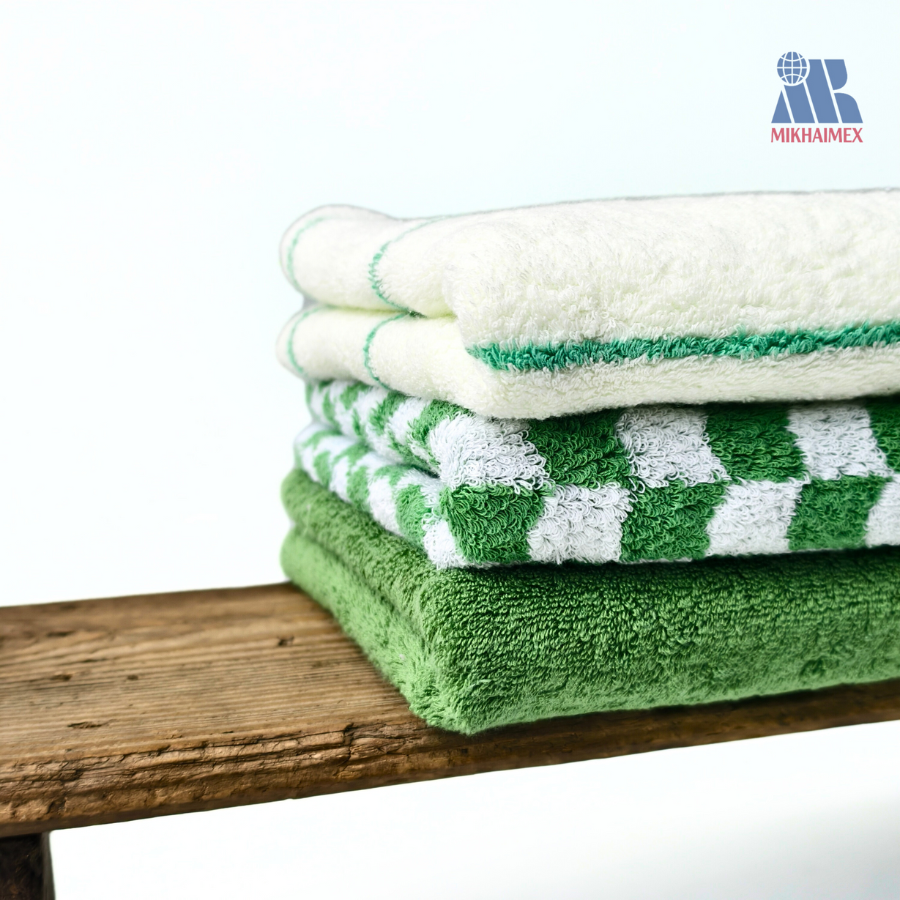
In the integration flow of Vietnam towel industry, Minh Khai Textile Joint Stock Company (Minh Khai Textile) stands out as a bright spot in effectively utilizing Free Trade Agreements to enhance product value. Minh Khai Textile realized early on that FTAs are the key to escaping the price competition trap and moving toward competing with reliability and superior technical quality.
Minh Khai Textile factory has built a modern, international-standard towel production ecosystem. From input yarn, the company always prioritizes raw materials that meet rules of origin for key agreements like CPTPP or EVFTA. The closed-loop towel weaving process at Minh Khai Textile not only helps optimize costs but also ensures transparency in traceability, a factor that gives customers in demanding markets like the USA, EU, and Japan complete peace of mind when signing contracts.
Typical products of Minh Khai Textile demonstrate sharp FTA thinking: Premium 5-star hotel towels: By applying high-density weaving technology and a fiber-protecting dyeing process, Minh Khai Textile has provided the international market with towel lines of superior durability. Utilizing tariff incentives helps the company’s products have extremely competitive prices in Europe while still ensuring sustainable profits to reinvest in the latest weaving technology. Functional and bio-based fiber towels: Capturing sustainable consumption trends in developed countries, Minh Khai Textile has promoted the weaving of towel lines from Bamboo and Beech wood fibers. These are products that easily utilize FTA incentives thanks to their environmentally friendly nature and clean, eco-standard production processes. Professional towel export manufacturing services: With large production capacity and strict quality management teams, Minh Khai Textile is a strategic partner for international OEM and ODM orders. The deep understanding of Customs procedures and Certificates of Origin by the Minh Khai team helps Vietnam towel orders always reach partners on time with optimized tax costs.
With Oeko-Tex Standard 100 certification and systematic investment in high-tech weaving systems, Minh Khai Textile has contributed importantly to asserting the position of Vietnam towel industry on the international stage. The company’s success is a vivid testament that when businesses know how to maximize advantages from FTAs, Vietnam towels can completely conquer new heights in turnover and brand reputation globally.
Choosing Minh Khai Textile is not just choosing an exquisite towel product but also choosing a partner with a global integration mindset, always leading in realizing trade advantages to bring the best benefits to customers and contribute positively to the development of Vietnam towel industry.