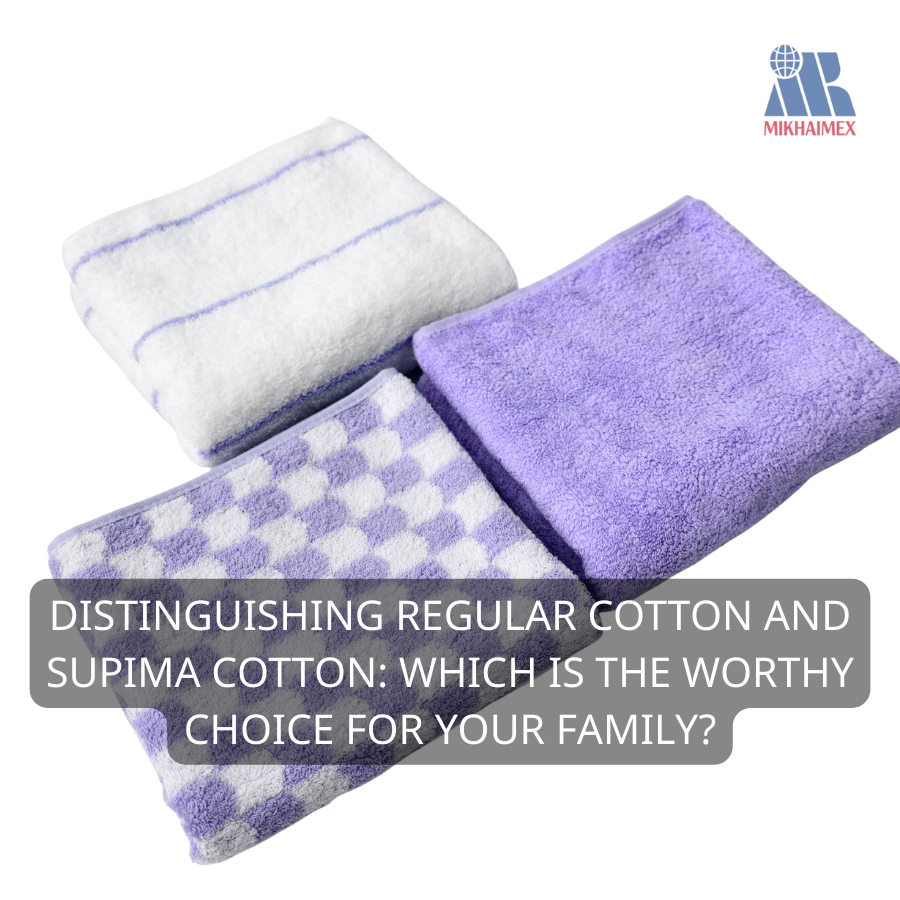
DISTINGUISHING REGULAR COTTON AND SUPIMA COTTON: WHICH IS THE WORTHY CHOICE FOR YOUR FAMILY?
1. The rise of premium fabrics in modern lifestyle
In the constant evolution of the global textile industry, modern consumers are no longer satisfied with just durable or warm clothing; they have begun to focus deeply on the tactile sensation and health safety of materials. The skin is the organ in most direct contact with clothing, bedding, and bath towels daily; therefore, the choice of fabric has become an investment in quality of life. Among countless natural fibers, cotton maintains its position as the world’s most popular fiber due to its breathability and benign nature. However, within the world of cotton fibers itself, there are distinct hierarchies of class.
While regular cotton is the “national fabric” found everywhere—from basic t-shirts to essential household items—Supima cotton emerges as a symbol of luxury and sophistication. Many modern families find themselves hesitating between choosing a reasonably priced regular cotton product and a significantly higher-priced Supima cotton one. Understanding the nature of each fiber type not only helps savvy homemakers save costs in the long run but also provides the optimal body care experience for every family member.
2. Regular cotton: The balance of durability and basic comfort
Regular cotton, also known as short-staple or medium-staple cotton, is harvested from the most common cotton plants worldwide. Its greatest advantage is good sweat absorption and highly accessible pricing. Most baby towels or family bath towels today utilize this type of fiber. However, the inherent disadvantage of regular cotton lies in the length of the fiber. Due to short staples, during the spinning process, manufacturers must perform more splices to create a continuous yarn. These splices are weak points that make the fabric prone to pilling or fraying after a short period of use.
When using a towel made from regular cotton, after about ten to twenty washes, you will notice the surface is no longer as soft as when it was first purchased. The short fibers begin to stiffen and mat together, creating a rough sensation against the skin. For those with sensitive skin or for young children, this roughness can cause micro-scratches or worsen inflammatory skin conditions. Nonetheless, regular cotton remains an economical choice for items with a high replacement frequency or those used in conditions that are not overly demanding of tactile luxury.
3. Supima cotton – The prestige of the world’s longest fibers
Stepping up to a higher level, Supima cotton is a trademarked name reserved for premium Pima cotton grown exclusively in the United States. The core difference that makes Supima cotton expensive and rare is the staple length. Supima cotton fibers are thirty-five to fifty percent longer than regular cotton fibers. This superior length allows for a much smoother spinning process with very few splices. The result is a fabric surface with a silk-like or cashmere-like smoothness while still retaining the durable characteristics of natural cotton.
The color retention of Supima cotton is also an absolute plus. Thanks to the long and fine fiber structure, dye particles can penetrate deep into the core of the fiber rather than just clinging to the surface. This helps products made from Supima cotton maintain vibrant and fresh hues even after hundreds of washes. If you place a Supima cotton towel next to a regular cotton towel after a year of use, you will see a stark difference in softness and color. Supima cotton is not just a material; it is a commitment to sustainability, helping to reduce fashion waste as the product lifespan is twice as long as conventional fabrics.
4. Practical comparison: When does your family need Supima cotton?
Deciding whether to invest in Supima cotton or stick with regular cotton depends on the specific needs of each area in your home. For products in direct and long-term contact with the skin, such as face towels, bath towels, or underwear, Supima cotton is an irreplaceable choice. Especially for baby towels, the absolute softness of Supima cotton helps protect the natural moisture barrier of the baby’s skin, preventing diaper rash or skin irritation caused by friction. Active individuals or those with meticulous skincare routines will also feel the difference as sweat is absorbed quickly without causing stickiness.
Meanwhile, for items like kitchen towels or hand towels in public areas of the house, regular cotton still performs its duty well. However, considering the long-term economic equation, a set of Supima cotton towels can be used for two to three years while maintaining original quality, whereas regular cotton might need replacement every six months. Therefore, Supima cotton is actually a more economical choice for families prioritizing durability and consumption class. Supima cotton brings a sense of indulgence right to your home, turning daily hygiene activities into relaxing moments akin to a five-star hotel experience.
5. High-quality towel lines by Minh Khai Textile Company
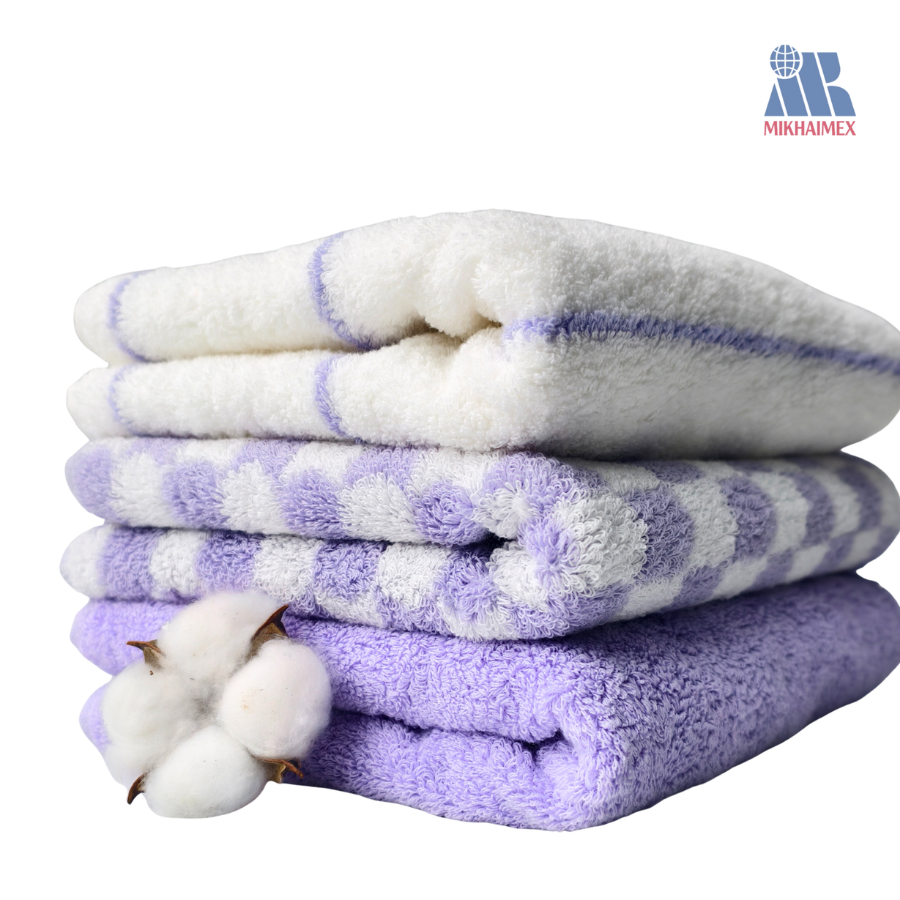
Understanding the differences between fiber types, Minh Khai Textile has constantly researched to incorporate the best materials into its products, meeting the increasing demands of the Vietnamese market. The traditional towel line of Minh Khai Textile has always been the top choice for families, thanks to carefully selected natural cotton sources, ensuring absolute absorbency and outstanding colorfastness over time. This is an iconic product line, associated with customer trust in a high-quality national brand.
Furthermore, Minh Khai Textile has pioneered the development of towels from bamboo fibers and modern microfiber. Minh Khai bamboo towels are famous for their natural antibacterial properties, coolness on the skin, and extreme suitability for hot and humid climates, while microfiber towels are an effective assistant for sports enthusiasts due to their super absorbency and quick-drying ability. For customers seeking class, Minh Khai’s Jacquard towels with sophisticated embossed patterns are the perfect choice to elevate living spaces, bringing luxurious and professional beauty.
In particular, the baby towel line of Minh Khai Textile is always subject to the strictest quality control standards. Each baby towel is carefully surface-treated to reach ideal softness, containing no harmful residual chemicals. Whether it is a regular cotton line or premium fiber lines, Minh Khai Textile always commits to bringing real value to consumers. The diversity in the product portfolio—from face towels, bath towels, and gift towels to specialized towels—has helped Minh Khai Textile become a trusted companion for all generations. Owning a product from Minh Khai is not just owning a towel; it is enjoying the dedication of Vietnamese weavers who always aspire to provide the best care for the community.