Wastewater Treatment Process and Green Production Commitment – Criteria for Choosing a Terry Towel Factory by Major Corporations
1. Global Strategic Shift Toward Sustainable Development and Supplier Selection Criteria of Major Supply Chains
In the context of the global economy facing major challenges from climate change, the textile industry is no longer outside the vortex of the green revolution. Multinational retail corporations and major brand chains in Japan, South Korea, and Europe have now completely changed their mindset regarding choosing supply partners. They are no longer merely interested in product costs or standard delivery schedules, but put social and environmental responsibility factors at the highest priority. A product appearing on international shelves must prove a clean manufacturing journey, leaving no negative consequences for the local ecosystem. Therefore, conducting field surveys to assess environmental protection capacity at each terry towel factory has become a mandatory step in the supplier appraisal process. Any enterprise that proactively anticipates this trend with substantive actions will open up golden opportunities to step into the global value chain.

2. Current Status of Waste Streams and the Importance of High-Tech Textile Dyeing Wastewater Treatment Systems
To understand why international partners are so strict with environmental processes, we need to look directly at the reality of the finished dyeing phase in the fabric fiber industry. The process of fiber treatment, scouring-bleaching, and dyeing to create vibrant, soft towels requires a huge amount of water usage along with specialized chemicals. Wastewater from these stages, if not strictly controlled, will possess high alkalinity, containing plenty of residual color intensity, difficult-to-decompose organic content, and highly toxic heavy metals. Recognizing that hazard, major brands always demand that the terry towel factory must operate a synchronous and modern wastewater treatment system. This system must skillfully combine physical measures such as sedimentation-filtration, physico-chemical methods for coagulation-color separation, as well as biological treatment using microorganisms to thoroughly decompose toxic organic compounds before discharging wastewater into the environment.
3. Closed Loop Circular Operation Processes and Ecological Certificates Guaranteeing Product Quality
The green production commitment of a reputable manufacturing unit does not stop at treating output wastewater to standard levels, but is also demonstrated in intelligent resource reuse strategies. Major corporations always highly appreciate terry towel factory models applying circular economy solutions, where a portion of wastewater after being treated to high purity will be recirculated to serve raw manufacturing stages. Besides, transitioning to using renewable energy such as rooftop solar power or biomass boilers utilizing agricultural waste instead of coal is also a big plus point helping to minimize the carbon footprint of products. The transparency in this operating process is guaranteed by prestigious ecological certificates such as OEKO-TEX or ISO 14001, helping products easily overcome non-tariff technical barriers to confidently appear in the most demanding consumer markets.
4. Macroeconomic Riddles and Long-Term Benefits of Enterprises When Investing in Clean Production Infrastructure
Many manufacturing units are often afraid that dedicating budgets to build environmental treatment systems achieving international standards will increase operating costs and reduce immediate profits. However, looking from the perspective of macroeconomics and long-term risk management, this is an investment bringing extremely sustainable returns. Owning a green-standard terry towel factory helps enterprises completely eliminate environmental legal risks, avoiding heavy administrative fines or the risk of operation suspension. Moreover, this is the powerful passport helping the factory build long-term strategic cooperative relationships with major partners, ensuring stable cash flow through long-term export orders even during the most volatile market periods.
5. Minh Khai Textile Company – The Symbol of Green Textile Capacity and Leading Sustainable Supply in Vietnam
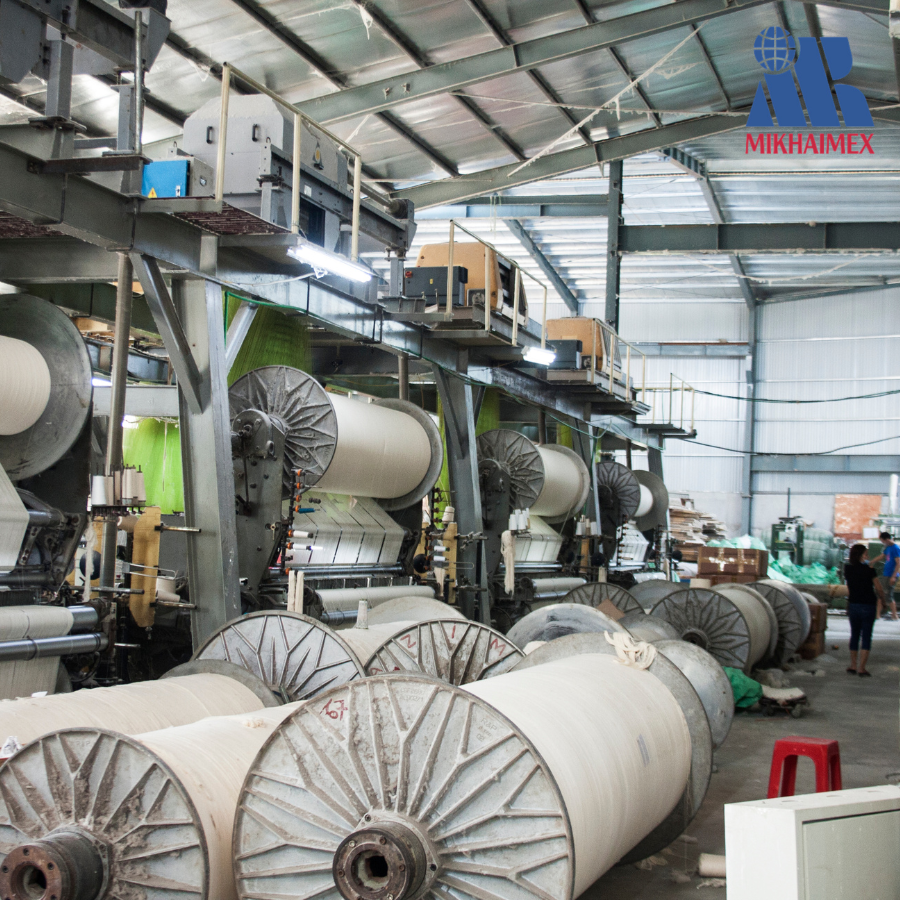
Anticipating the green shift wave and deeply understanding the strict criteria of the international market, Minh Khai Textile Company is proud to be a pioneering unit creating sustainable manufacturing standards in the domestic textile industry. The enterprise has boldly invested in a synchronous modern factory system along with a closed high-tech wastewater treatment plant, ensuring the entire output waste stream always meets the most rigorous safety indexes of the Ministry of Natural Resources and Environment. Each terry towel shipped from Minh Khai’s terry towel factory not only possesses outstanding fluffy softness and absorbency from 100% natural combed cotton yarn sources, but also proudly achieves the prestigious OEKO-TEX certification for biosafety. With robust OEM/ODM processing capacity combined with a responsible manufacturing philosophy, Minh Khai Textile Company commits to accompanying B2B partners and major corporations in optimizing supply chains, together elevating brand values and bringing Vietnamese textile products to confidently vươn ra biển lớn.